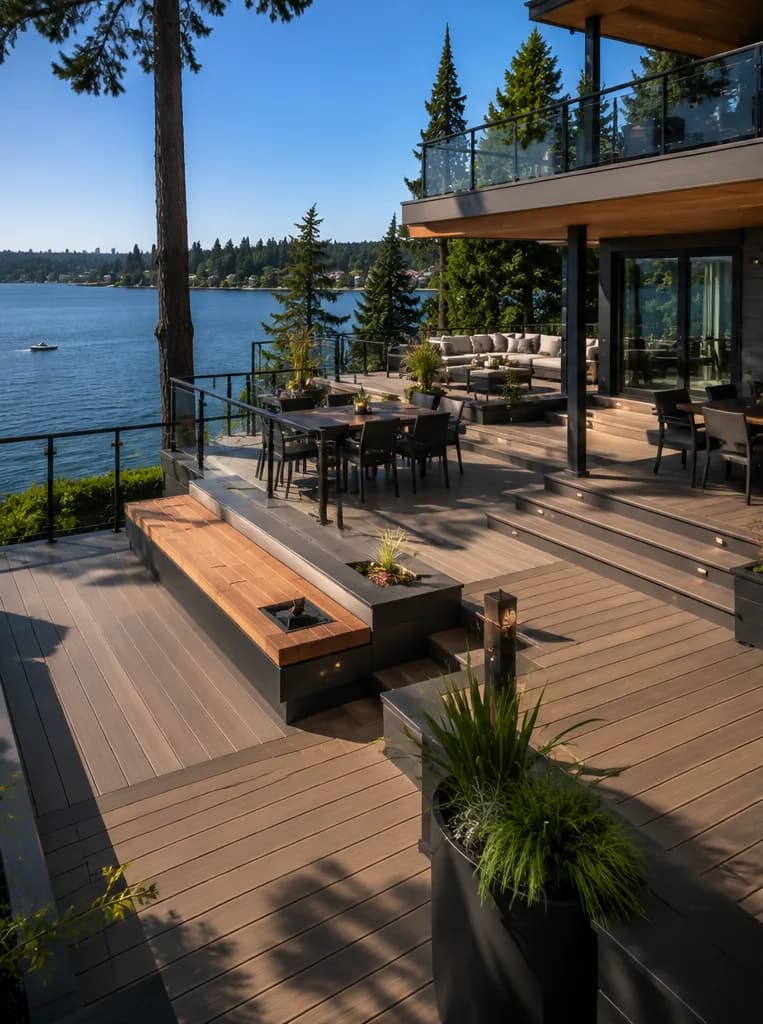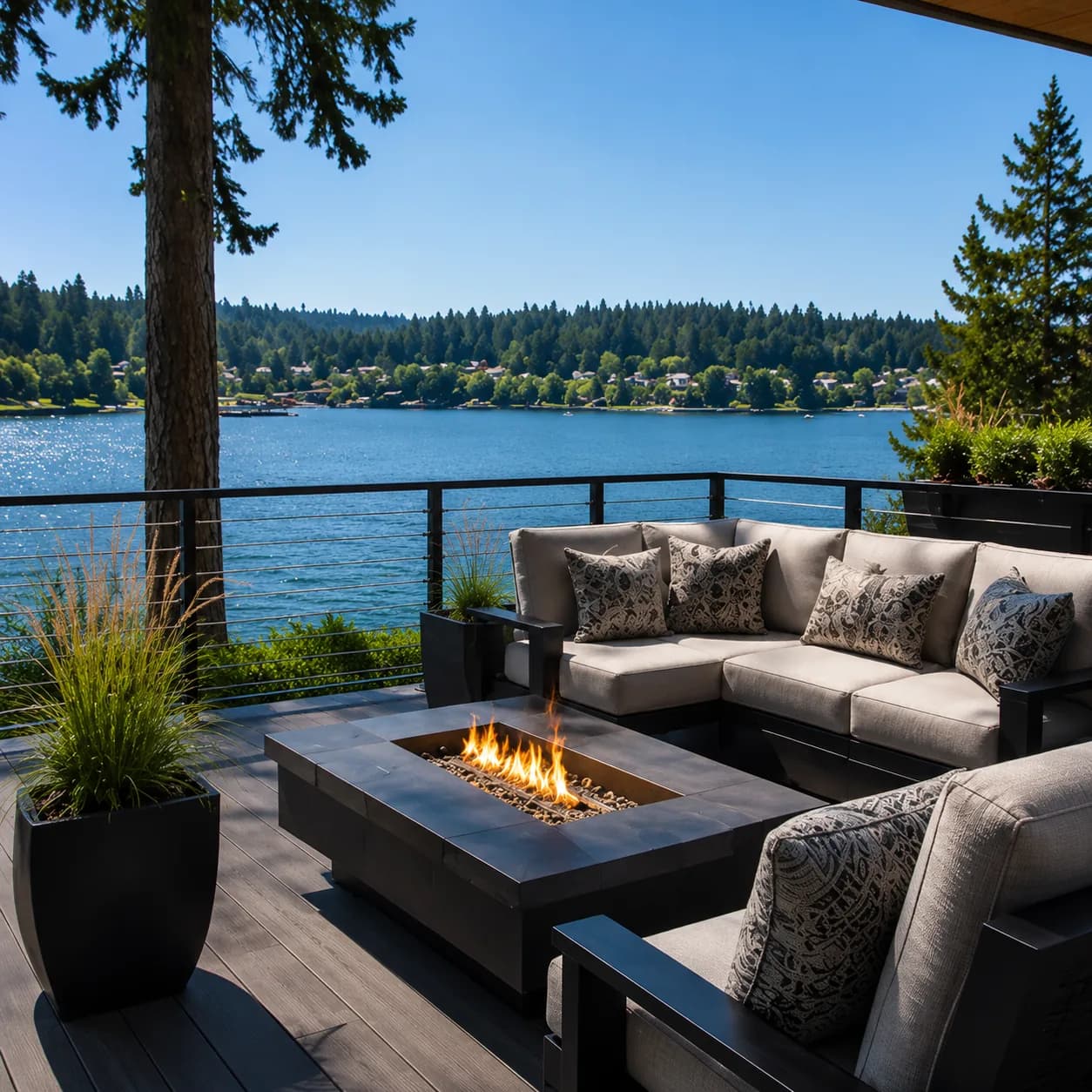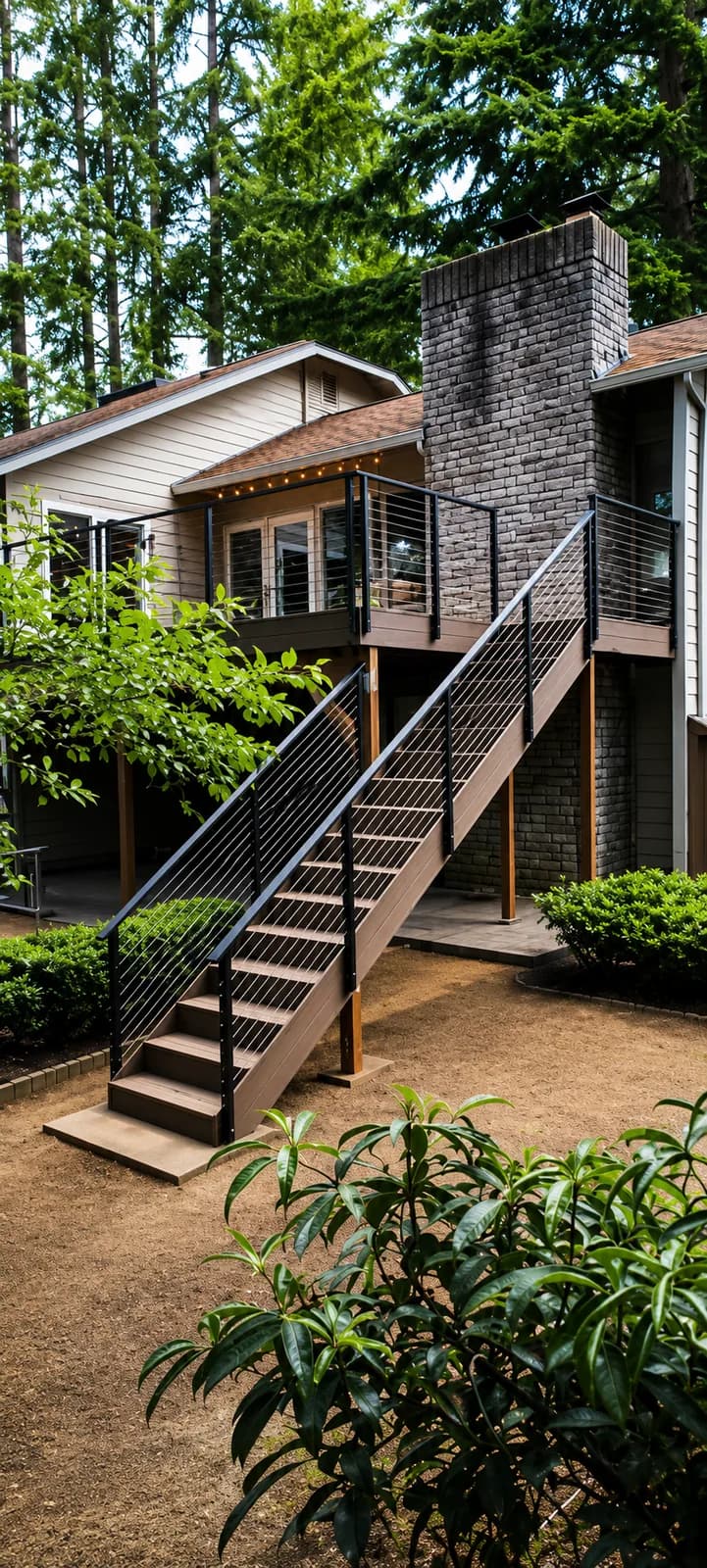
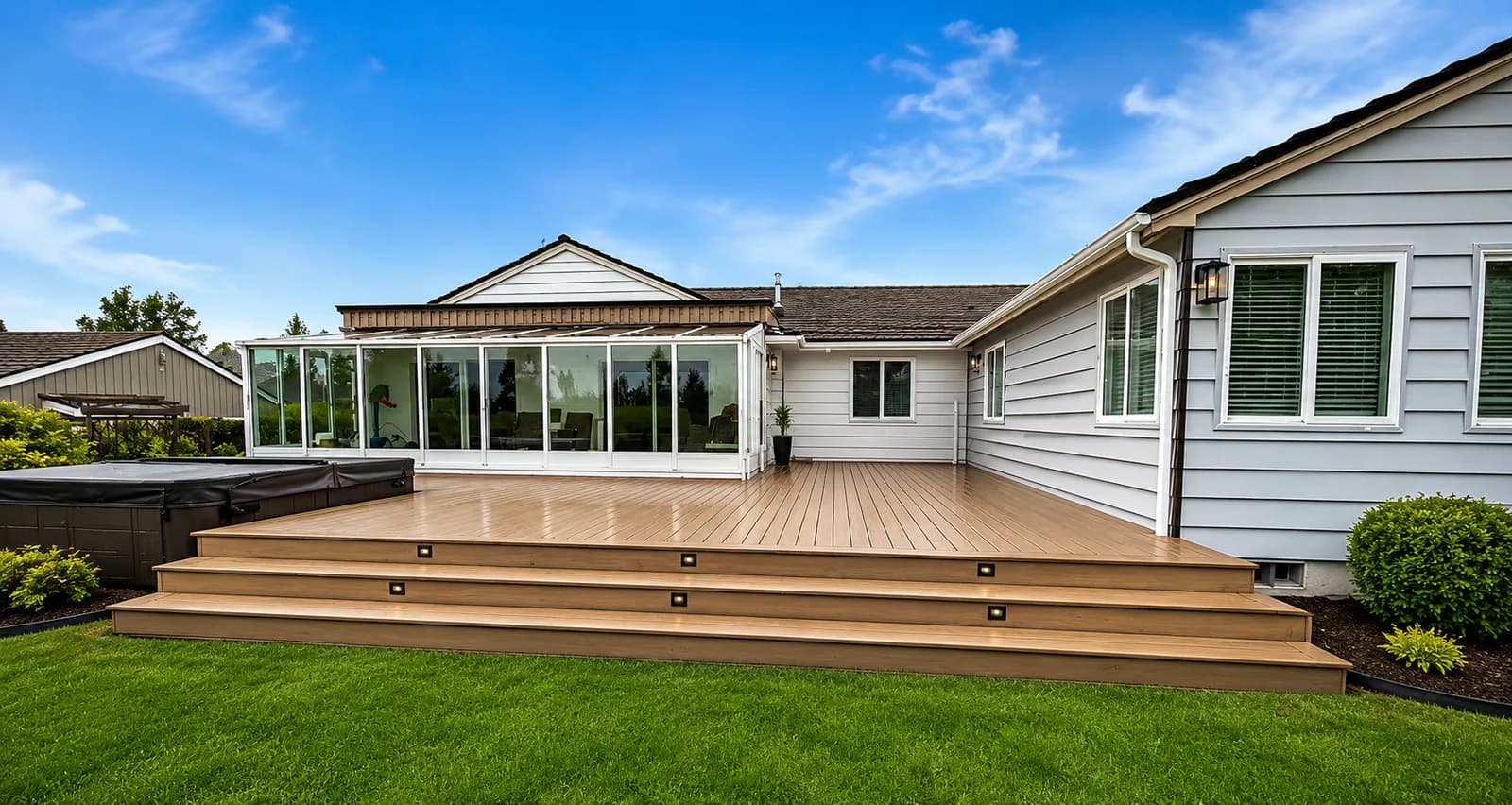
There are really only three families of decking material, and they offer three genuinely different ownership experiences. Not three slightly different looks — three different relationships with your deck over the next 20 years. Here's a straight, no-spin comparison of PVC, composite and wood, and who each one is actually right for.
The quick definitions
- Wood — natural lumber: cedar, pressure-treated fir, or dense tropical hardwoods like ipe.
- Capped composite — a core of wood fiber and recycled plastic, wrapped in a tough protective polymer cap. Trex, Fiberon, and TimberTech's composite lines.
- Capped polymer / PVC — fully synthetic boards with no wood fiber at all, like TimberTech AZEK.
The big divide is wood versus not-wood, and within not-wood, whether there's any wood fiber in the core.
Maintenance: the difference you'll feel most
This is the category that defines daily life with your deck.
- Wood demands the most: cleaning and re-sealing every one to two years in our climate, plus eventual board replacement. Beautiful, but it's a relationship with ongoing chores.
- Composite asks for almost nothing: an occasional rinse and the rare soapy scrub. No staining, no sealing, no splinters.
- PVC asks for the least of all: it's the most stain- and moisture-proof, so even spills and shade-film wipe away easily.
If "I want to enjoy the deck, not maintain it" describes you, that sentence alone rules out wood for most people.
Durability in the Pacific Northwest
Our climate is a moisture test, not a sun test, and that reshapes the ranking:
- PVC is the most impervious — no wood in the core means nothing for water to reach, even at a cut edge. It's our top pick for the dampest, shadiest, most demanding sites.
- Composite is close behind. The cap seals out moisture, so the boards resist the rot, moss and mildew that destroy wood here.
- Wood is the most vulnerable. Even rot-resistant species weather, gray and eventually decay in our wet season without diligent upkeep.
Both PVC and composite carry 25-to-50-year fade-and-stain warranties and routinely last decades here — more on that in how long composite decks last in Washington.
Looks and feel
This is the one category where wood still has a sentimental edge — and even that gap is closing.
- Wood has unmatched natural warmth, grain and smell. Nothing is quite like real wood underfoot.
- PVC and composite have come remarkably far. Premium lines like TimberTech AZEK Vintage have convincing, low-contrast grain that reads like real hardwood from a few feet away. Composite tends to look a touch warmer; PVC lines are crisp and uniform.
Underfoot, dark synthetic boards warm up more in direct sun, though our mild summers make this a minor concern compared to hot climates.
Cost: up front vs. over time
Here's where the honest framing matters:
- Wood has the lowest purchase price and the highest long-term cost — stain, sealer, your weekends, and replacement boards add up.
- Composite costs more up front and far less to own; over 15–20 years it usually costs less than a high-maintenance wood deck.
- PVC is the premium purchase and the lowest-maintenance to own.
We break down real local numbers in the 2026 cost guide for Snohomish County. And remember that resale favors the low-maintenance options, as we cover in does a deck add value to your home.
Who each material is right for
- Choose PVC if: you have a damp, shaded or waterfront site, want the absolute lowest maintenance, and the budget allows. Maximum peace of mind.
- Choose composite if: you want the best balance of natural looks, durability and value — the right call for most PNW homeowners.
- Choose wood if: you genuinely love real wood, want that specific warmth, and will actually do the regular sealing. See hardwood vs. softwood for the PNW to pick a species.
The constant across all three
No matter which surface you choose, the same truth applies: the frame underneath decides how long the deck lasts. A premium PVC board on an under-built, poorly flashed frame is a beautiful deck with a hidden problem at the wall. We over-build the structure — properly sized treated joists, a correctly flashed ledger, Simpson Strong-Tie hardware, real drainage — so whatever you choose on top reaches its full lifespan.
Still deciding? Request a free estimate and we'll bring samples of all three, lay them on your actual deck site, and help you choose — built dam good.
Common Questions