How Long Do Composite Decks Last in Washington's Climate?
Composite decking manufacturers love a big number — 25 years, 30 years, sometimes 50. Those warranties are real, but they describe boards tested in a lab, not boards living through a Pacific Northwest winter. So how long does a composite deck actually last here, in our rain and shade? After years of building and tearing out decks across the region, here's our honest read.
The realistic lifespan
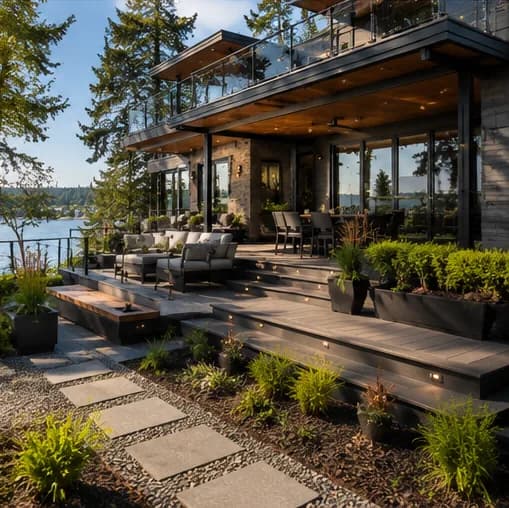
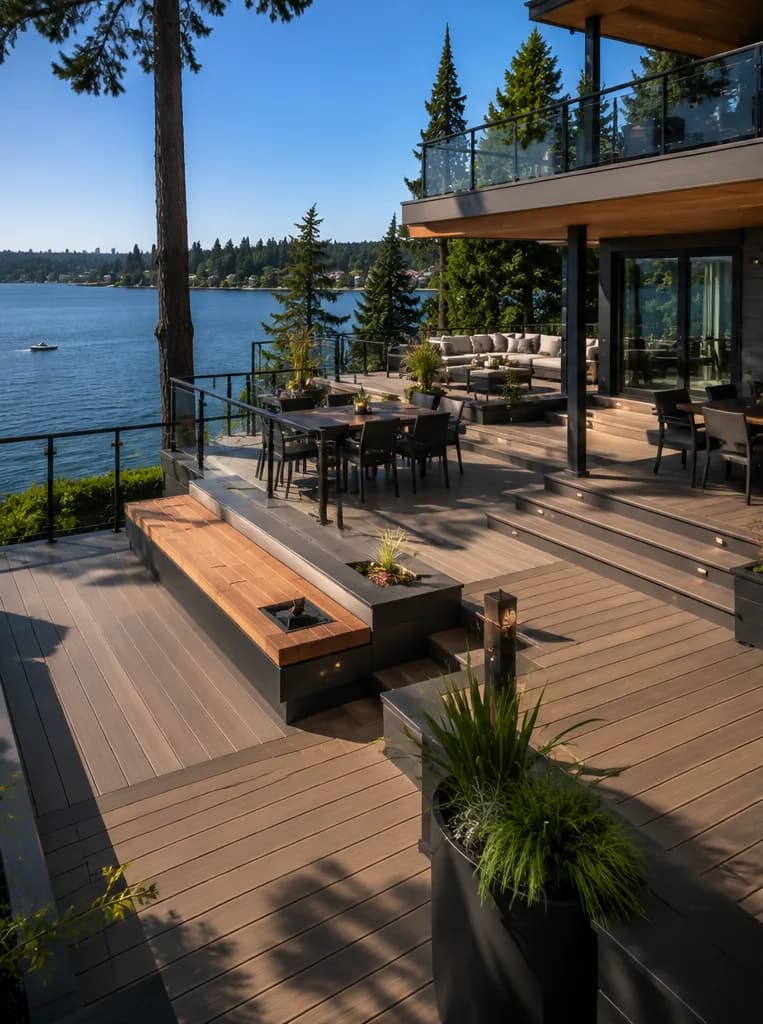
A properly built capped composite or PVC deck commonly lasts 25 to 30-plus years in our climate, and the boards themselves often outlast even that. We've pulled up composite surfaces well over a decade old that still looked nearly new. Our diffuse, often-overcast light is genuinely gentle on these boards — you'll see far less fading here than in a high-UV desert climate.
But — and this is the whole point of the article — the boards are almost never what fails. The frame is.
Why the structure decides the real lifespan
A composite board can't rot. The wood-and-plastic core is sealed inside a protective cap, and fully synthetic PVC boards have no wood to rot in the first place. So when an "old composite deck" fails, it's not the deck surface giving out. It's the structure underneath:
- Undersized or improperly spaced joists that sag over time
- A ledger board that was never correctly flashed, letting water into the house wall
- Footings that heave or settle in our freeze-thaw and clay soils
- Trapped debris and poor drainage holding moisture against the frame
Put a 30-year board on a 10-year frame and you have a 10-year deck. This is why we tell every client that the brand on top matters far less than the build underneath — the same theme runs through our Trex vs. TimberTech comparison.
What our climate does (and doesn't) do to composite
Let's separate myth from reality.
It won't rot or grow rot
Capped composite and PVC strongly resist the decay that destroys wood decks here. Moisture simply can't get into a sealed core. This is the single biggest reason composite makes sense in the PNW.
It can grow surface film in deep shade
In heavily shaded spots — under firs, on a north-facing lakefront — you may see a thin layer of mildew, moss spores or pollen film on the surface. This is not decay. It sits on top of the cap and rinses off. A spring wash and the occasional soapy scrub keeps the surface clean and grippy. That's the entire maintenance routine.
It barely fades
Premium capped lines carry 25-to-50-year fade-and-stain warranties, and our mild light rarely tests them. Expect your deck to look very close to day one for many years.
How to make a composite deck go the distance
Lifespan isn't luck — it's built in. To get the full 25–30+ years:
- Over-build the frame. Properly sized, treated joists with correct spacing.
- Flash the ledger correctly. This single connection causes more deck failures than anything else. Done right, it keeps water out of your home's framing.
- Use Simpson Strong-Tie hardware at the critical structural connections.
- Design in drainage. Water should leave the structure, not pool in it. Keep gaps clear of leaves and debris.
- Rinse it occasionally. Twice a year is plenty in most yards.
Do those things and the manufacturer's warranty becomes a floor, not a ceiling.
When an older deck is telling you it's time
If you already have an aging deck — composite or wood — watch for wobble, soft framing, rusted fasteners, or any separation where the deck meets the house. Those are structural warnings, not cosmetic ones, and we walk through all of them in signs your aging deck is damaging your home. Sometimes a sound frame just needs resurfacing; sometimes the safe answer is a rebuild.
Built to outlast the rain
The headline on a composite warranty is a promise about the boards. The real lifespan of your deck is a promise made by whoever builds the structure. We over-build the part you can't see precisely so the part you can see lasts as long as the label says.
Thinking about a deck that'll still look great in 2050? Request a free estimate and we'll show you exactly how we build for the long haul — built dam good.
Common Questions