Ask three deck builders whether Trex or TimberTech is better and you'll get three different answers — usually based on whichever brand they buy in bulk. We carry both, so we don't have a dog in that fight. What we care about is which board will still look great after a decade of Pacific Northwest rain, shade and pollen. Here's how we actually decide between them.
Two great brands, built differently
Both Trex and TimberTech make capped boards — a tough protective shell wrapped around a core — and both are light-years ahead of the wood decks they replace. The difference is in that core.
- Trex (their Transcend, Enhance and Signature lines) is a capped composite: a core of recycled wood fiber and plastic, sheathed in a polymer cap. The wood content gives it a warm, natural look and excellent value.
- TimberTech offers two families. Their PRO and EDGE lines are capped composite like Trex, while their flagship AZEK line is capped polymer — fully synthetic, with no wood fiber in the core at all.
That last distinction is the one that matters most in our climate.
Why the core matters in nine months of wet
The Pacific Northwest doesn't punish a deck with brutal sun the way Arizona does. It punishes a deck with moisture — months of drizzle, damp shade under cedars and Douglas firs, and standing humidity that never quite burns off.
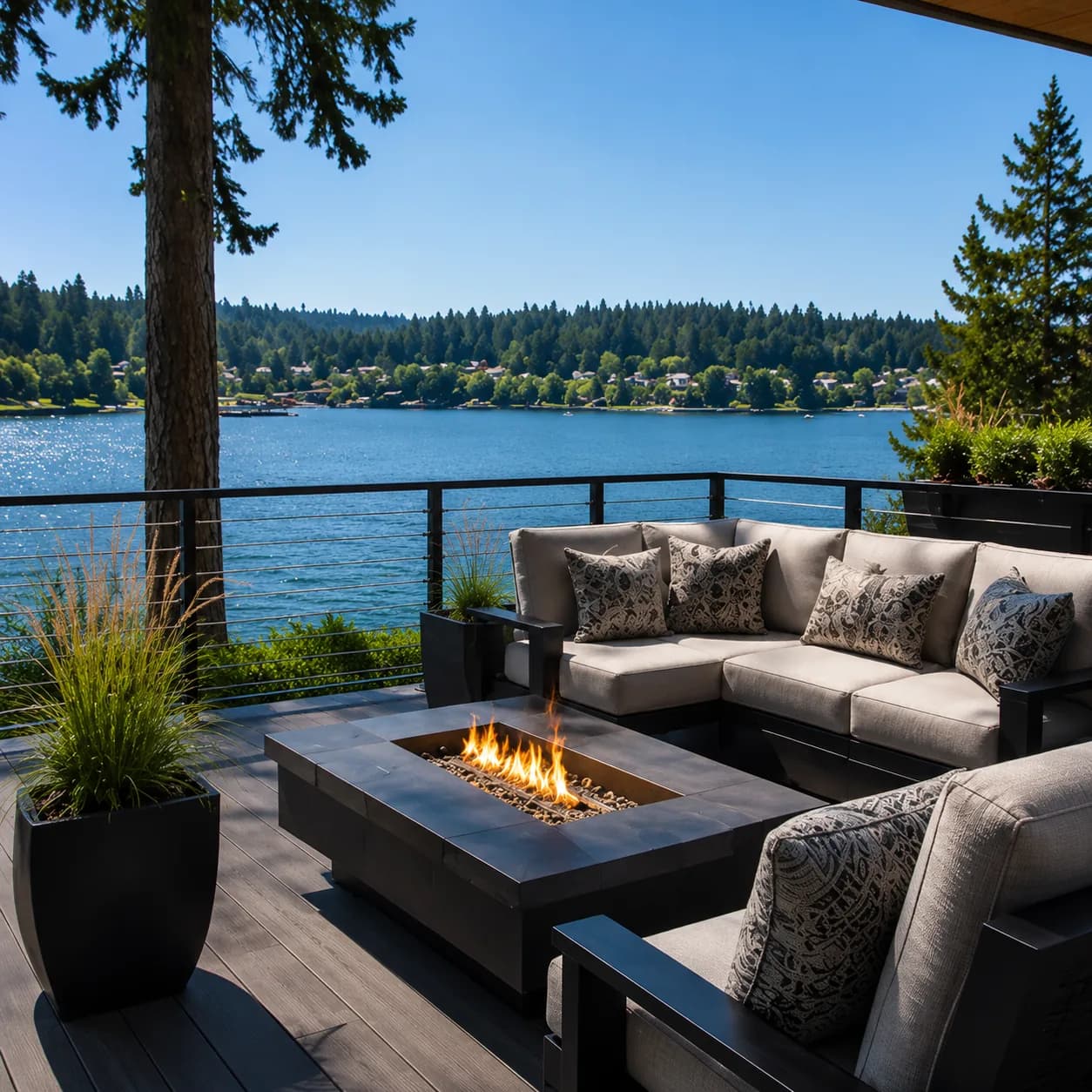
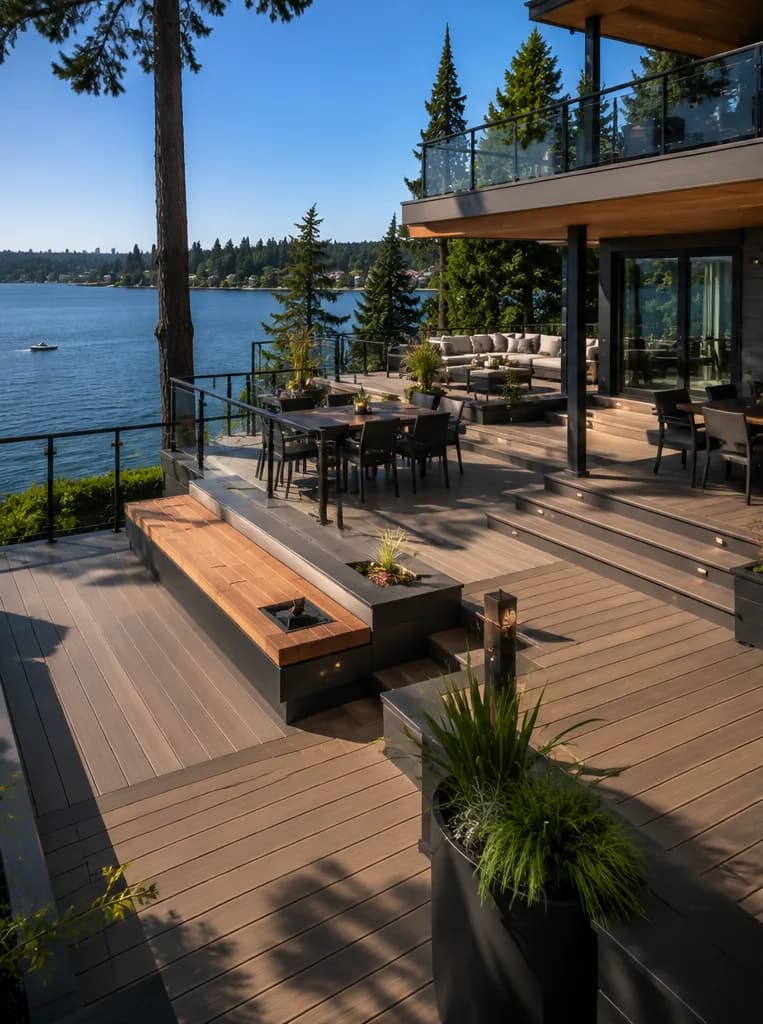
A fully synthetic board like AZEK has no wood fiber anywhere for water to reach, even in the unlikely event the cap is breached at a cut edge. That makes it the most moisture- and stain-resistant option we install, and our first recommendation for the dampest, shadiest, most tree-covered lots — think a north-facing lakefront in Bellevue or a forested hillside in Woodinville.
Capped composites like Trex Transcend and TimberTech PRO are also excellent and fully rated for ground contact and wet conditions; the cap does its job. For a sunny Snohomish or Lake Stevens backyard, a quality capped composite delivers a beautiful, durable deck at a friendlier price than full polymer.
Heat and color underfoot
Darker boards get warmer in direct sun — true of every brand. Because PNW summers are mild and often overcast, this matters less here than in hot climates, but it's still worth thinking about for a fully exposed south-facing deck. Both brands publish heat data, and both offer lighter, multi-tonal colors that stay comfortable.
On looks, this is genuinely personal. Trex Transcend has a rich, deep grain we love for warm, traditional homes. TimberTech AZEK's Vintage and Landmark collections have some of the most convincing wood-grain visuals on the market, with low-contrast streaking that reads like real hardwood from a few feet away. We bring physical samples to every consultation and lay them on your actual deck site, in your actual light, because a board that looks perfect in a showroom can read completely differently under a gray Eastside sky.
Traction when it's wet
A fair question in a place where the deck is wet half the year. Both brands use textured, embossed surfaces that grip well — generally better than smooth, algae-slicked wood. The bigger factor is keeping the surface rinsed of the organic film that builds up in shade. A spring rinse and the occasional soapy scrub keeps either brand grippy. We cover this in how long composite decks last in Washington.
Warranties: read past the headline number
Both brands back their premium lines with strong 25-to-50-year fade-and-stain warranties plus structural coverage. The numbers are similar enough that they shouldn't be the deciding factor. What matters more is that the warranty only protects the boards — it does nothing for a deck built on an under-spec frame. Which brings us to the part nobody markets.
The honest truth: the frame decides everything
Here's what we tell every client: the brand of board on top matters far less than the structure underneath. We've torn out ten-year-old composite decks where the premium boards looked brand new but the framing was rotting because of a bad ledger connection and no flashing. The board did its job. The build didn't.
Whatever brand you choose, insist on:
- An over-built frame with properly sized, treated joists
- A correctly flashed ledger where the deck meets the house
- Simpson Strong-Tie hardware at the critical connections
- Real drainage so water leaves the structure instead of sitting in it
Get that right and both Trex and TimberTech will deliver a deck that outlives the warranty. Get it wrong and the best board on the market can't save you. If you're weighing your options more broadly, our guide to choosing the best decking material for a PNW home walks through the full field.
So which do we pick?
For most clients, it comes down to site and budget:
- Damp, heavily shaded or waterfront lot, top-tier longevity: TimberTech AZEK (capped polymer).
- Sunny yard, best value with a natural look: Trex Transcend or TimberTech PRO (capped composite).
- Either way: an over-built, properly flashed frame — non-negotiable.
The good news is there's no wrong answer between these two. They're both built to handle our weather. The wrong answer is a cheap board on a cheap frame.
Want a straight recommendation for your specific space? Request a free estimate and Josh will bring real samples to your site and tell you honestly which board makes sense — no brand loyalty, no upsell.
Common Questions