Railing is the most underrated decision on a deck. People agonize over board color and then treat the railing as an afterthought — which is backwards, because railing is exactly where a deck looks custom or looks builder-grade. It's also the element that either frames your view or fights it. Here's how the modern railing systems compare for our homes, our views and our weather.
Cable railing: the modern PNW favorite
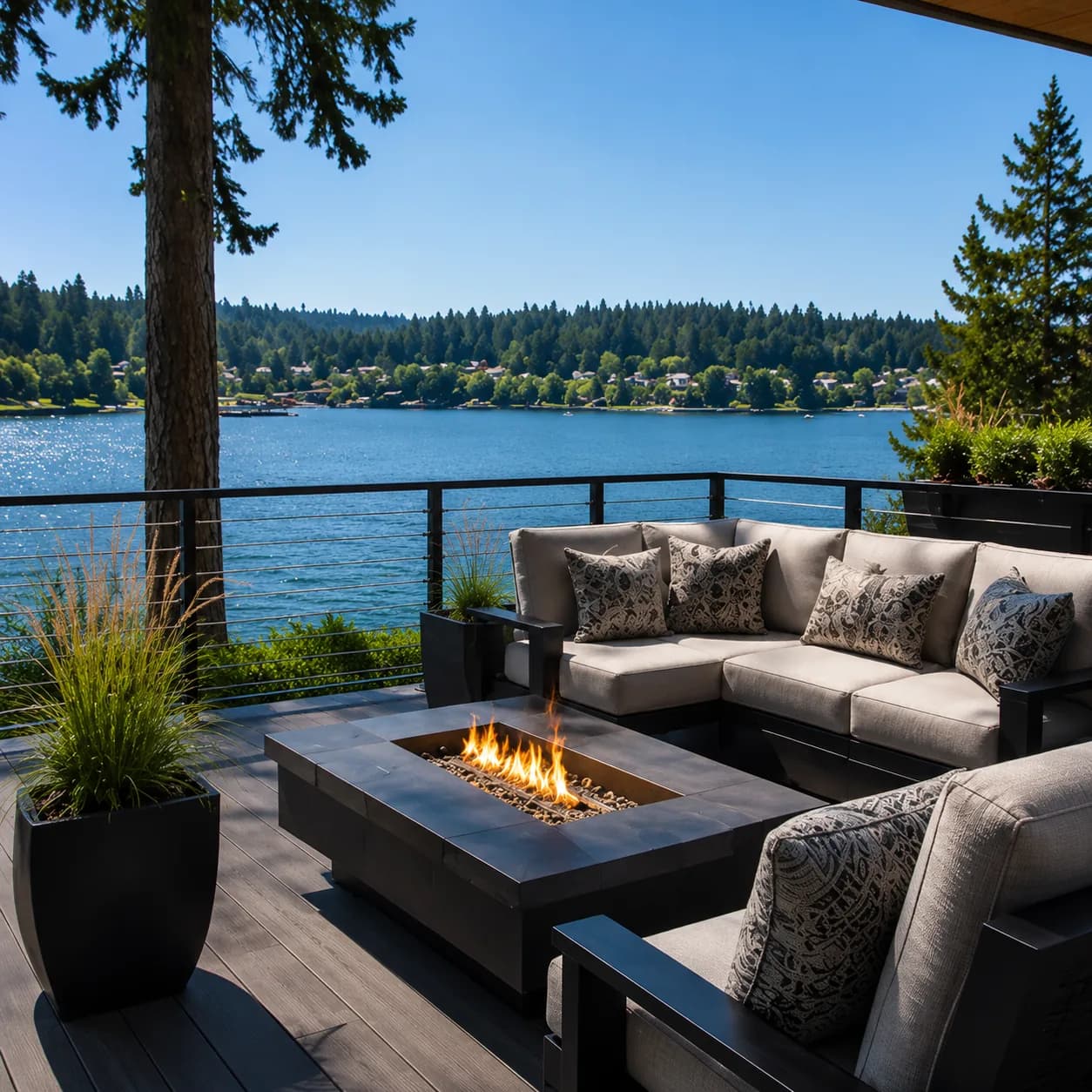
If your deck has a view worth keeping — a lake, a territorial vista, a forested slope — cable railing is hard to beat. Thin horizontal lines of stainless steel run through a frame of metal or composite posts, nearly disappearing from a few feet away so your eye goes straight to the scenery.
- Look: clean, contemporary, minimal. It reads as architectural.
- Views: among the best — the cables visually vanish.
- Maintenance: very low. Stainless handles our wet climate well; an occasional wipe-down is about it.
- The one thing that matters at install: proper cable tension and correct post spacing. Done right from the start, cables stay taut and code-compliant for years. Done cheaply, they sag.
Cable is our most-requested view railing, and for good reason.
Glass railing: the invisible wind-block
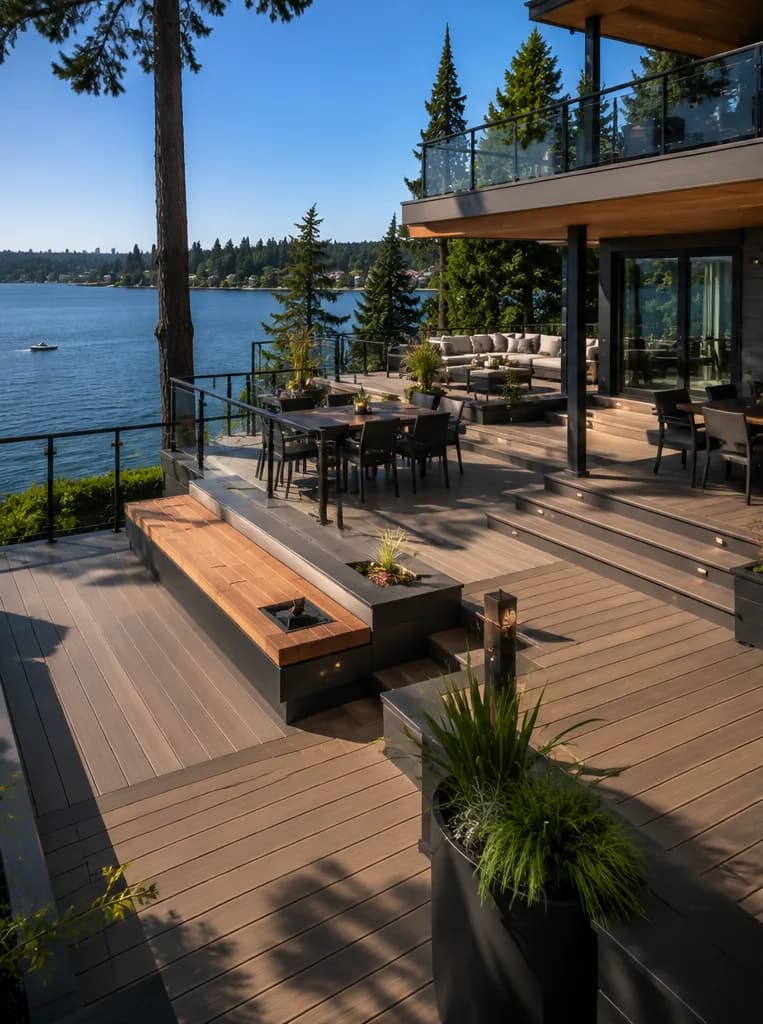
When a deck is exposed — a waterfront lot, a bluff, anywhere the wind comes off the water — glass panel railing offers a nearly invisible barrier that also blocks wind so you can actually sit out there.
- Look: seamless and luxurious; the view continues uninterrupted.
- Views: unobstructed, with the bonus of wind protection.
- Maintenance: periodic cleaning to keep the glass clear — more upkeep than cable, but purely cosmetic.
- Best for: exposed, windy sites where you want the view and shelter.
It's the premium choice, and on the right lakefront deck it's transformative.
Aluminum railing: clean, durable, value-friendly
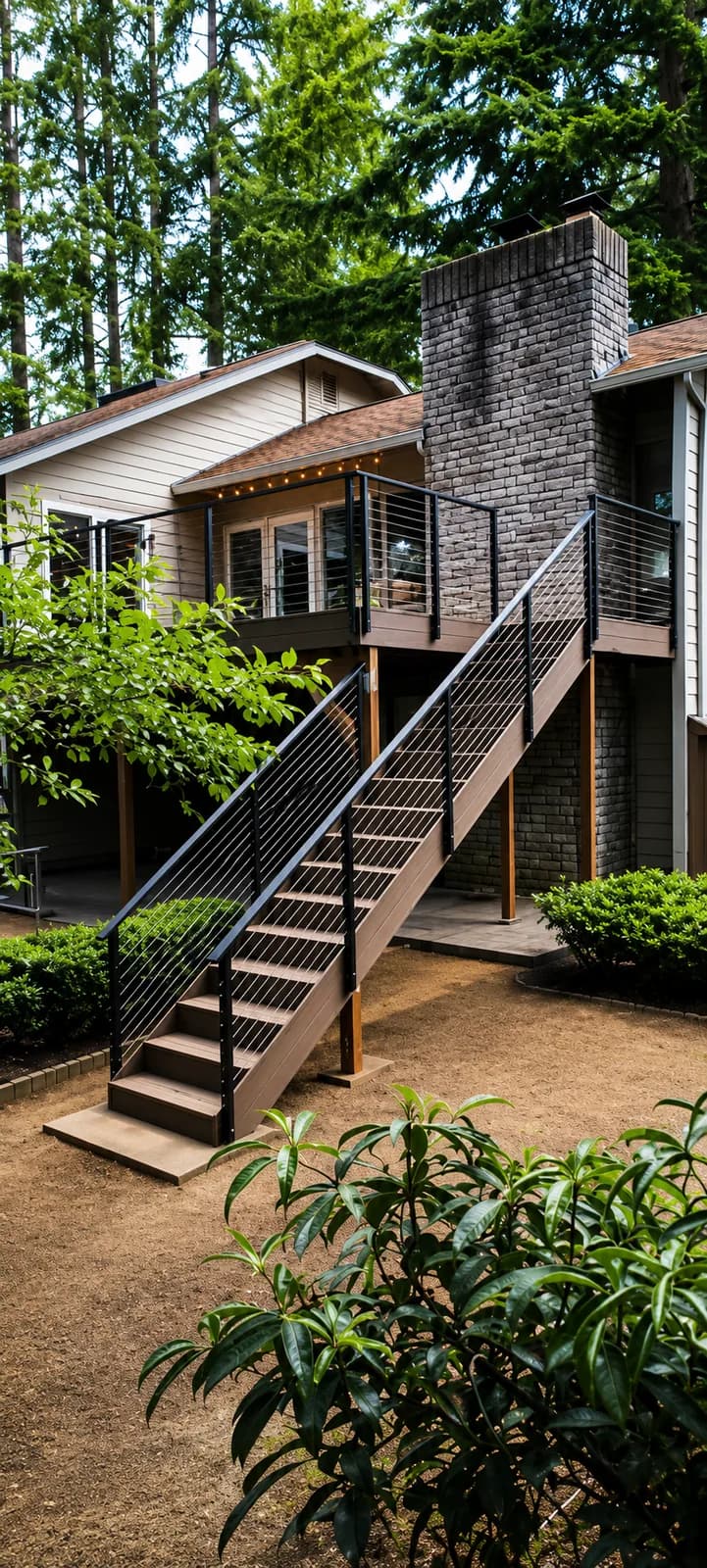
Not every deck needs cables or glass. Powder-coated aluminum railing is a workhorse: crisp lines, excellent durability in our rain, and a friendlier price.
- Look: clean and modern, especially in black.
- Views: good — slim balusters keep sightlines fairly open.
- Maintenance: minimal; powder coating holds up well to moisture.
- Best for: modern homes that want a tidy, durable rail without the premium of cable or glass.
It pairs beautifully with composite decking for a cohesive, contemporary look.
Composite railing: matched and warm
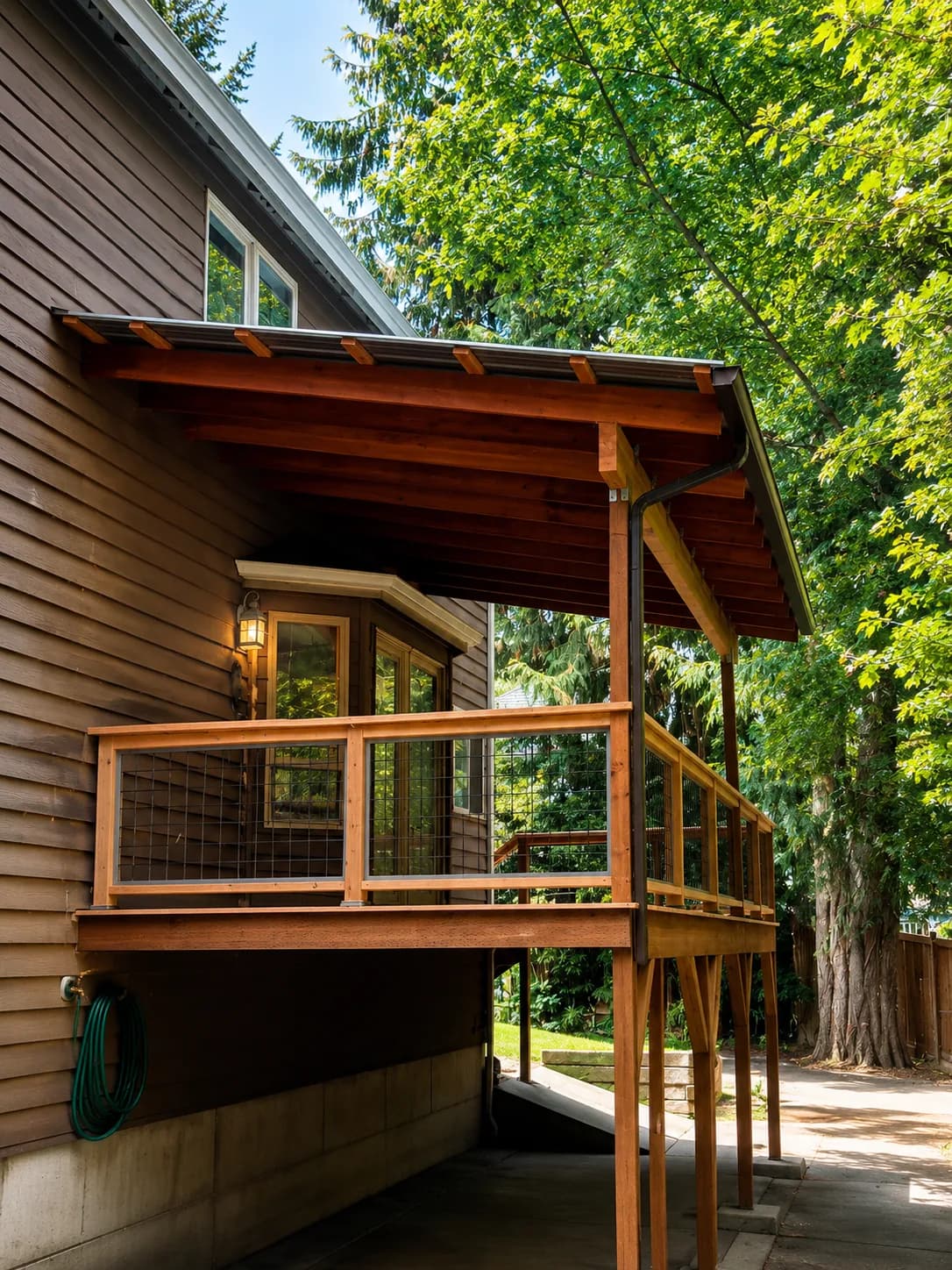
When you want the railing to read as part of the deck rather than a contrast to it, composite railing that matches or complements your boards gives a warm, unified, substantial look. It's the most traditional of the modern options, with the same low-maintenance, rot-proof benefits as composite decking. Great for homes going for a richer, less industrial feel.
How to choose
The right railing keys off three things:
- The view. Got one worth preserving? Cable or glass. No major view? Aluminum or composite will serve you well and save money.
- Exposure. Windy, exposed site? Glass earns its premium by blocking wind. Sheltered yard? Cable's openness is ideal.
- The home's style. Minimal modern leans cable, aluminum or glass; warm and traditional leans composite.
And budget, of course — railing is one of the bigger cost levers on a deck, as we lay out in the 2026 cost breakdown.
Don't forget: railing is a safety system
It's easy to think of railing as decoration, but it's first and foremost a guardrail — a code-driven safety system. In Washington, guardrails have required heights (typically 36–42 inches) and infill spacing rules (no gap a 4-inch sphere can pass through). Cable railing in particular has to be tensioned correctly to meet that spacing under load.
This is one more place where the install quality matters as much as the product. A beautiful railing that isn't built to code isn't a bargain — it's a hazard. We engineer post spacing, footings and cable tension to meet code so the look never comes at the expense of safety. The same principle runs through everything we build, including the warning signs we cover in signs your aging deck is damaging your home.
Light it up
One last tip: railing and lighting belong together. Integrated low-voltage lighting in posts and along the rail makes the deck safe and stunning after dark — which, for half our year, is most of the evening. It's the finishing touch that makes a custom railing feel complete.
Frame the view, build it right
The right railing system disappears when you want the view and protects you without ever being noticed. Get the product and the install right and it's the detail that makes the whole deck look intentional.
Want help choosing a railing that fits your view and your home? Request a free estimate and we'll design it — and build it dam good.
Common Questions