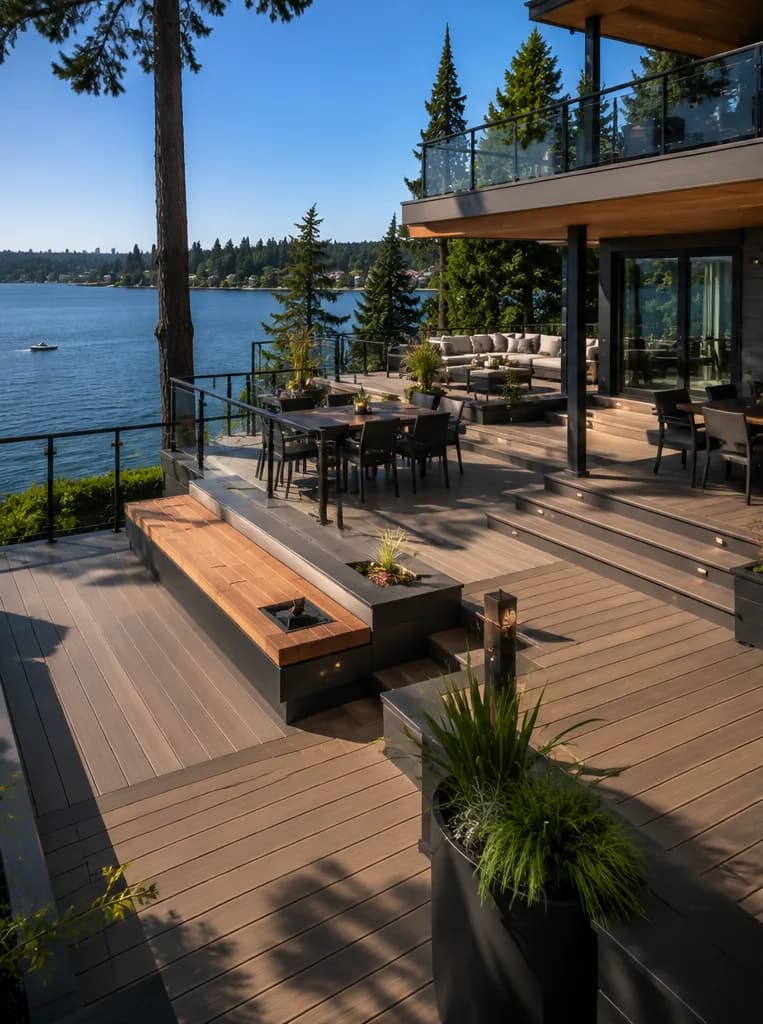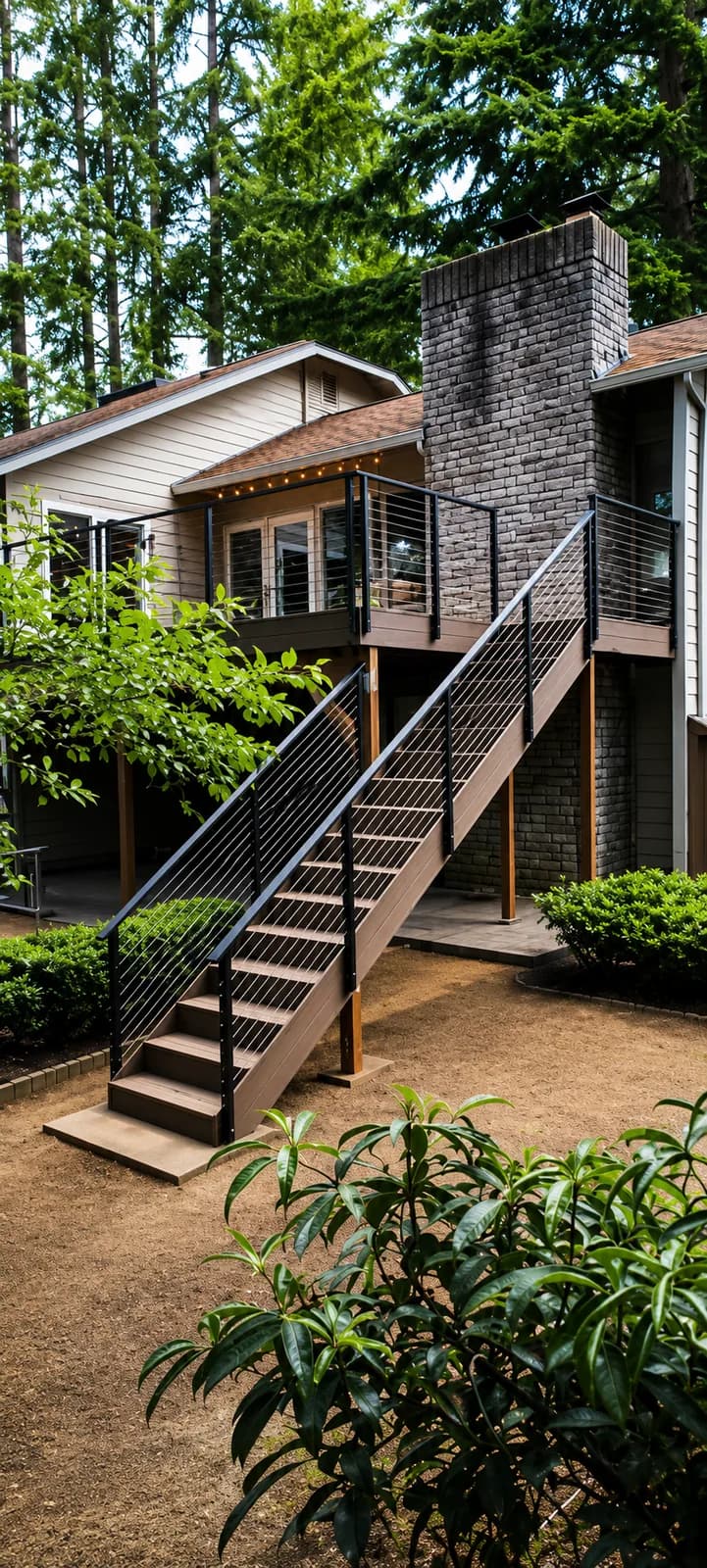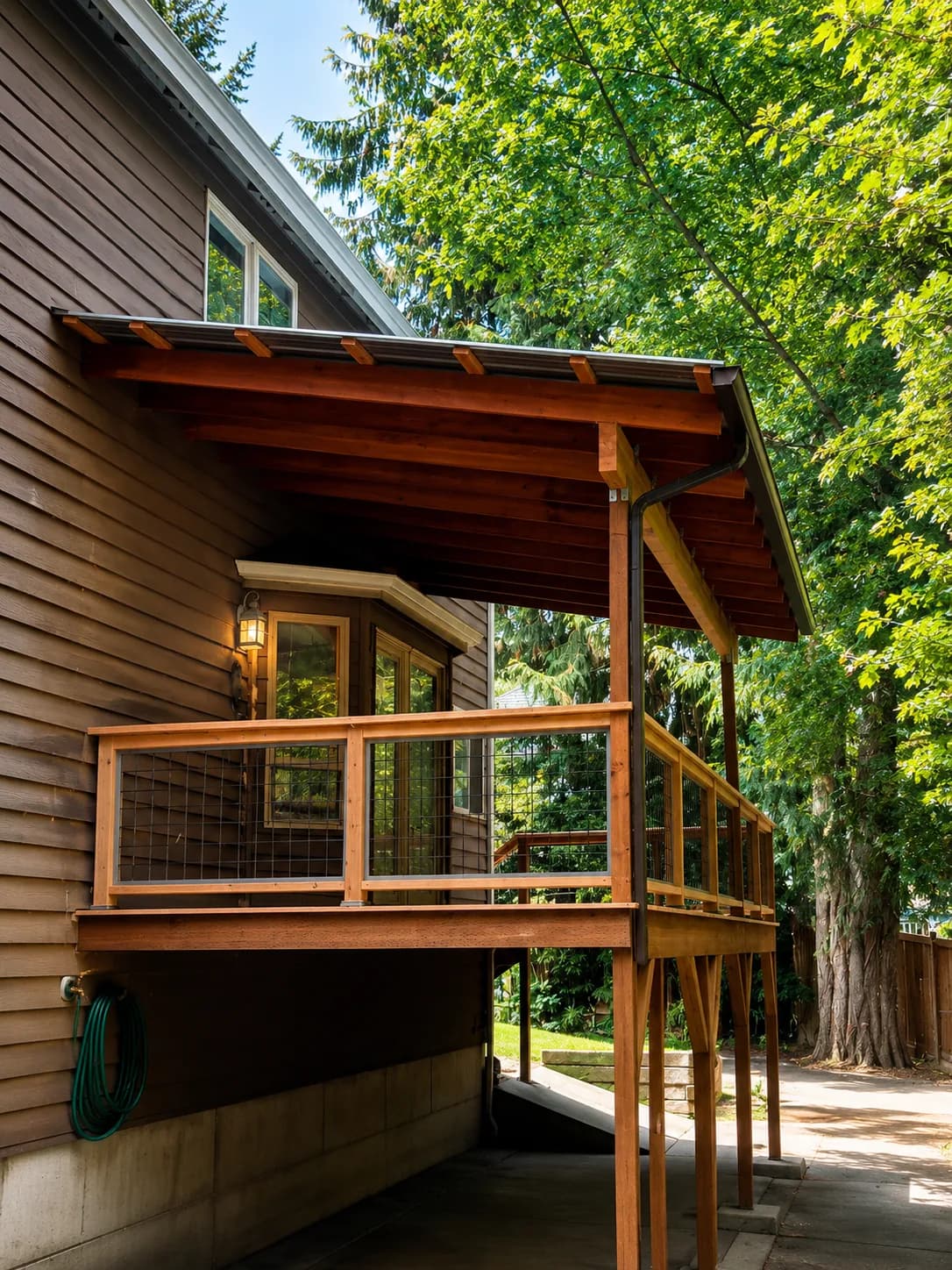
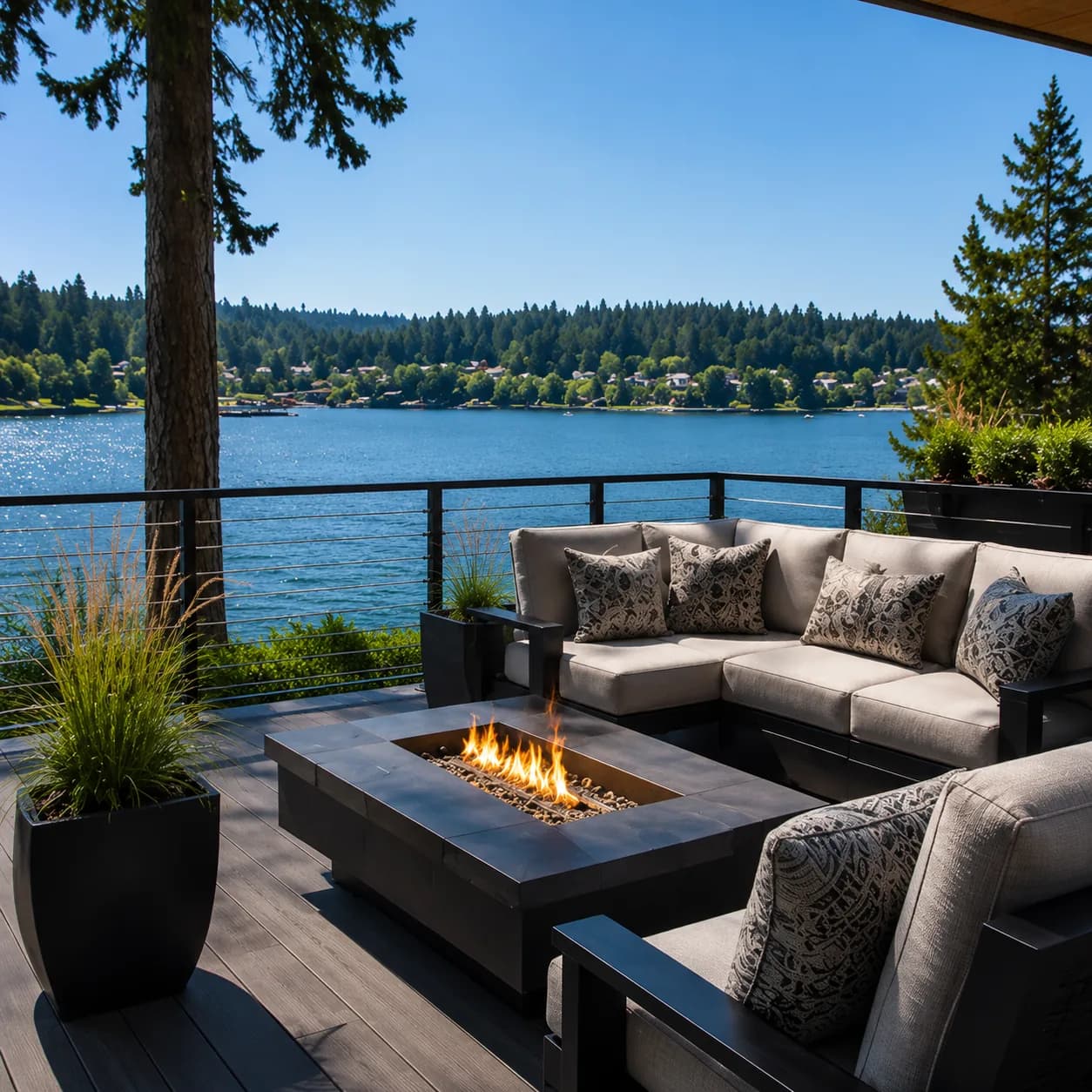
Choosing a decking material sounds simple until you start reading product pages and realize every brand claims to be the best at everything. The truth is quieter: the right board depends on your site, your budget, and how much of your weekend you're willing to spend on upkeep. After nearly two decades building decks across the Eastside and Snohomish County, here's the framework we actually use.
Start with your site, not the showroom
Two homes a mile apart can need completely different decks. Before we talk brands, we look at:
- Sun and shade. A south-facing Snohomish backyard bakes in summer; a north-facing lot tucked under firs stays damp and cool. Shade favors the most moisture-resistant materials and accelerates moss and mildew on anything organic.
- Drainage and grade. Lakefront, hillside and clay-heavy lots all move water differently. The material matters less here than the structure — but a wet site makes low-maintenance boards even more worth it.
- The house itself. The deck should look like it belongs. Board color, railing style and detailing all key off your home's architecture.
Material is the last decision, not the first.
The realistic options for the PNW
Pressure-treated lumber
The cheapest surface and the most demanding. In our wet-dry cycles, treated boards cup, crack and check within a few seasons, and they need regular sealing to look decent. We use pressure-treated lumber constantly — for the framing underneath, where it belongs — but rarely recommend it as the surface you walk on.
Cedar and other softwoods
Beautiful, naturally rot-resistant, and genuinely lovely underfoot. The catch is maintenance: cedar needs cleaning and re-sealing every one to two years here or it grays, mildews and weathers fast. If you love real wood and accept the upkeep, cedar is a fine choice. We break down the wood options in detail in hardwood vs. softwood decking for the PNW.
Capped composite
A wood-fiber-and-plastic core wrapped in a protective polymer shell — Trex, Fiberon, and TimberTech's composite lines. No staining, no sealing, no splinters; just an occasional rinse. It resists the rot, moss and mildew that plague wood in our climate, and it's our most-requested material for exactly that reason.
Capped polymer / PVC
Fully synthetic boards like TimberTech AZEK, with no wood fiber at all. The most moisture- and stain-resistant option we install, and the lightest. Ideal for the dampest, shadiest, most demanding sites. It costs a bit more than composite but buys the highest peace of mind. We compare the two head-to-head in PVC vs. composite vs. wood.
Match the material to how you live
The best material is the one that fits your actual life:
- You want to enjoy the deck, not maintain it. Capped composite or PVC. This is most of our clients.
- You love real wood and don't mind the ritual of sealing it. Cedar or a tropical hardwood.
- You're on a tight budget and plan to upgrade later. A well-built treated-lumber deck on a solid frame, with a plan to resurface in composite down the road.
There's no universally "best" board — there's the best board for you.
Don't let the surface distract from the structure
We say this in every guide because it's the thing that actually fails: the frame underneath determines how long your deck lasts, not the brand on top. A premium composite board on an under-built, poorly flashed frame is a beautiful deck with a short life and a hidden problem at the wall.
Whatever surface you choose, insist on properly sized treated joists, a correctly flashed ledger, Simpson Strong-Tie hardware at the key connections, and real drainage. That's what separates a deck that lasts 25 years from one that's quietly rotting your house — a risk we cover in signs your aging deck is damaging your home.
A quick way to narrow it down
If you want a fast gut-check, ask yourself three questions:
- How shaded and wet is the site? The damper it is, the more you lean toward PVC, then composite.
- How much maintenance will you actually do? Be honest. If the answer is "as little as possible," skip wood.
- What's the budget, and over what timeframe? Composite and PVC cost more up front but less to own over 15–20 years.
Answer those and the field narrows quickly. For real numbers, see our 2026 cost breakdown for Snohomish County.
Let us help you choose on-site
The fastest way to the right material is to have someone who builds in your climate look at your actual space. Request a free estimate and Josh will walk your site, bring physical samples, and give you an honest recommendation — built dam good for the way you live outside.
Common Questions