Hardwood vs. Softwood Decking in the Pacific Northwest Climate
If you've decided you want real wood underfoot — and plenty of people do, for the warmth and the smell and the honesty of it — the next question matters more than most realize. Hardwood or softwood? In our climate, that choice largely decides how much of your summer you'll spend maintaining the deck versus enjoying it. Here's an honest breakdown for Pacific Northwest homes.
First, what these terms actually mean
"Hardwood" and "softwood" refer to the type of tree, not literally how hard the board is (though they often track that way):
- Softwoods come from conifers — cedar, redwood, pressure-treated fir and pine. These are the traditional, more affordable deck woods.
- Hardwoods come from broadleaf trees — and for decking, that usually means dense tropical species like ipe, cumaru or mahogany.
Both can make a beautiful deck. They just ask very different things of you.
Softwoods in the PNW
Cedar
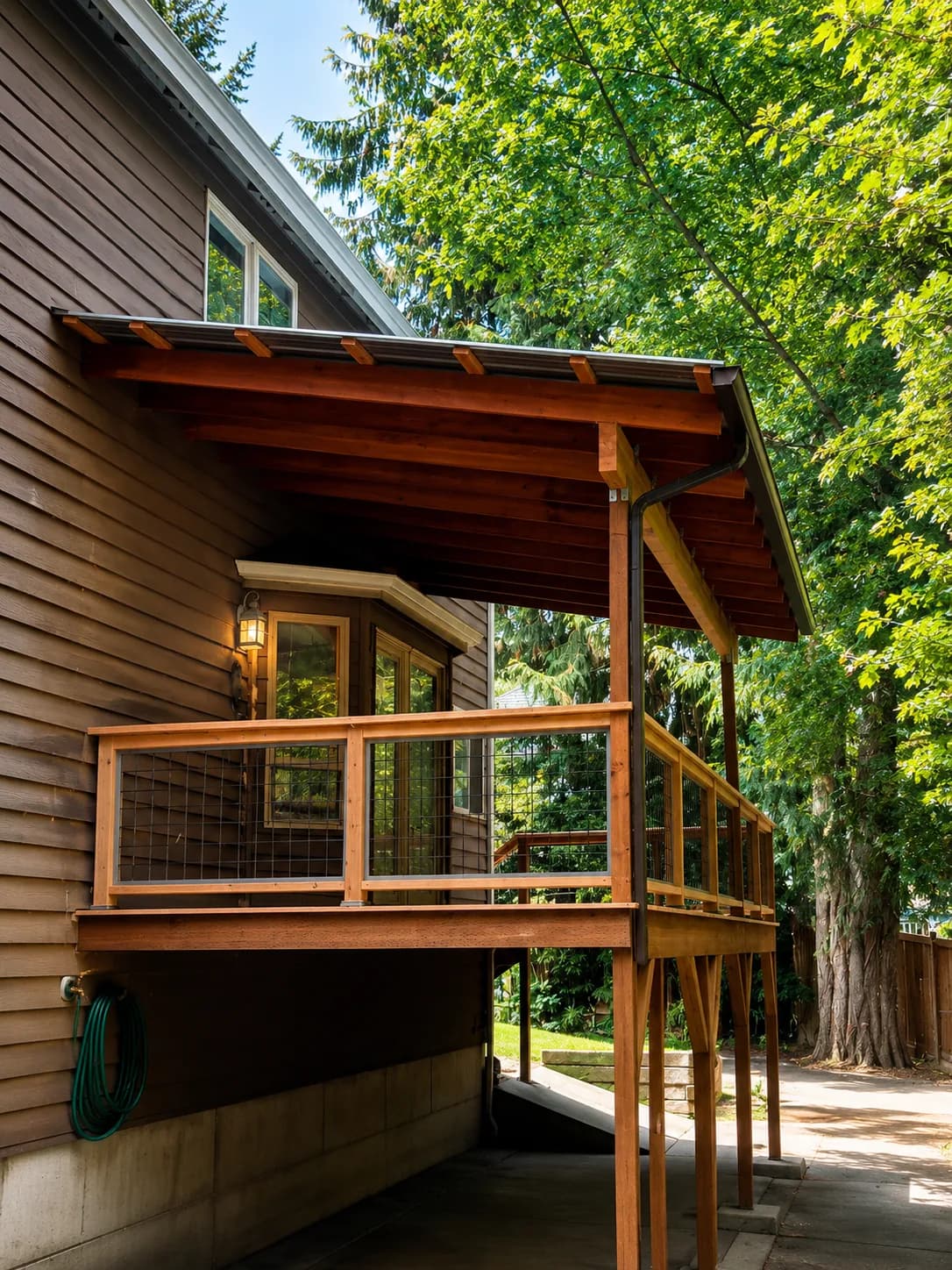
The classic Northwest deck wood, and for good reason. Western red cedar is naturally rot- and insect-resistant, lightweight, dimensionally stable, and gorgeous. It's milled right here in the region.
The catch is maintenance. In our long wet season, cedar needs cleaning and re-sealing every one to two years to fight graying, mildew and weathering. Skip it and even cedar's natural resistance won't stop it from looking tired fast. Cedar is also softer, so it dents and wears more than a dense hardwood.
Pressure-treated lumber
Cheapest of all, but the most demanding as a walking surface. Treated boards cup, crack and check in our wet-dry cycles and need regular sealing. We love pressure-treated lumber for the framing underneath a deck, where its rot resistance does real work — but we rarely recommend it for the surface you actually touch. More on that distinction in how to choose the best decking material for a PNW home.
Hardwoods in the PNW
Ipe and other tropical hardwoods
Tropical hardwoods are in a different league for density and durability. Ipe is so dense it's naturally rot-, insect- and even fire-resistant, and a well-maintained ipe deck can last decades. Underfoot it's rock-solid and stunning.
The trade-offs are real, though:
- Cost. Tropical hardwoods are among the most expensive decking materials, period.
- Weight and labor. They're heavy and hard on tools, which adds to install time and cost.
- Maintenance. To keep that rich color, ipe needs periodic oiling; left alone it weathers to a silvery gray (some people love this — but it's a choice, not no-maintenance).
- Sourcing. Responsible, sustainably harvested sourcing matters and is worth asking about.
The maintenance reality nobody escapes with wood
Here's the honest throughline: every wood deck in the Pacific Northwest needs regular maintenance. Softwood needs it more often and more visibly; dense hardwood needs less but still needs it to hold color. Our climate — months of moisture, shade, moss spores and pollen — is simply hard on organic material.
That's not a reason to avoid wood. It's a reason to be honest with yourself about whether you'll do the maintenance. A sealed, cared-for cedar deck is beautiful. A neglected one grays, mildews and can start to fail — and a failing wood deck is more than cosmetic, as we cover in signs your aging deck is damaging your home.
Why so many PNW homeowners end up choosing composite
We'd be doing you a disservice not to mention it: most of our clients who start out wanting wood ultimately choose capped composite instead. The reason is simple — modern composite delivers a convincingly warm, wood-like look with none of the sealing, oiling or graying. In a climate that punishes wood this hard, skipping the maintenance entirely is a powerful argument.
If you're torn, our head-to-head PVC vs. composite vs. wood comparison lays the three side by side.
So which wood should you pick?
- You want classic PNW warmth at a moderate price and don't mind sealing it: cedar.
- You want maximum density and longevity and have the budget: a tropical hardwood like ipe.
- You want the look of wood without the upkeep: that's composite, not wood — and that's okay.
There's no wrong answer, only the one that matches how much maintenance you'll actually do.
Whatever you choose, the frame still rules
One constant across every material: the structure underneath determines how long your deck lasts. A premium hardwood surface on an under-built, poorly flashed frame is a costly deck with a short life. We over-build the part you can't see — properly sized treated joists, a correctly flashed ledger, Simpson Strong-Tie hardware — so the surface you chose gets to live out its full lifespan.
Want help weighing wood against the alternatives for your specific yard? Request a free estimate and Josh will bring samples and an honest opinion — built dam good.
Common Questions