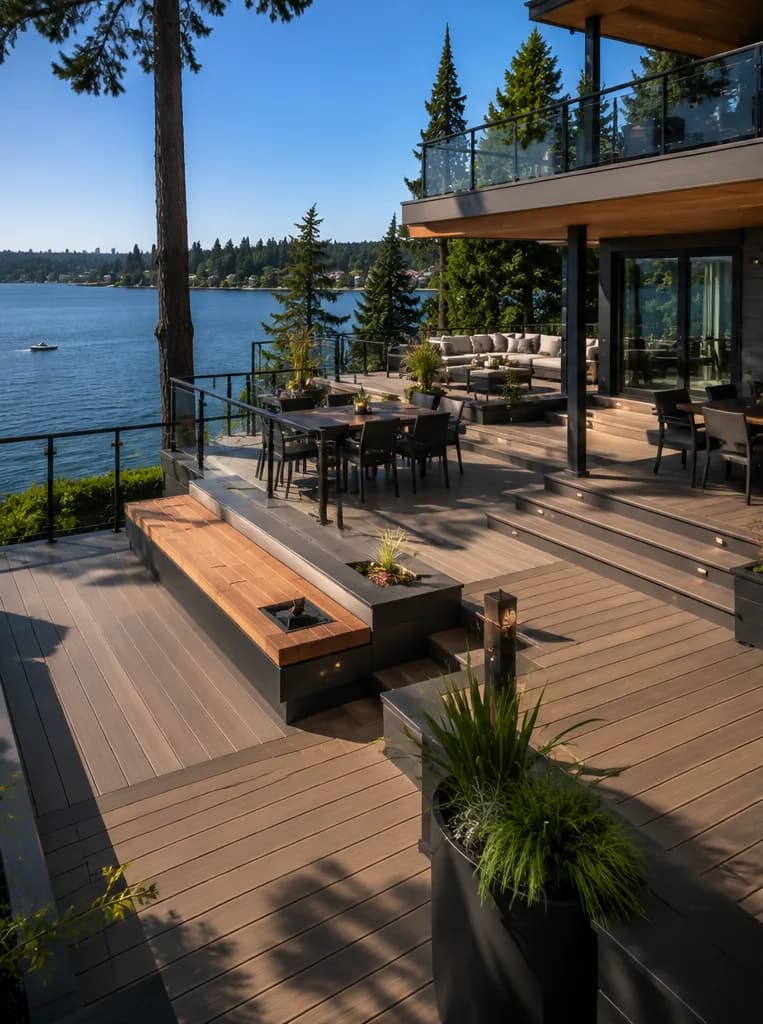

Signs Your Aging Deck Is Quietly Damaging Your Home
A failing deck doesn't announce itself. It doesn't crack in half one afternoon. It declines quietly — a little more wobble each season, a soft board here, a rust stain there — until one day it's both a safety hazard and a source of hidden rot in the wall of your house. The good news is that decks give plenty of warning if you know what to look for. Here are the signs Pacific Northwest homeowners should never ignore.
Why an old deck is a whole-house problem
Most people think of a worn deck as a cosmetic issue — gray boards, a tired look. The real danger is structural, and it doesn't stay contained to the deck. The most serious failures happen where the deck attaches to your home, and that's exactly where damage can spread into the house framing. A neglected deck isn't just an eyesore; it can become an expensive repair to your home itself.
Let's go through the warning signs, roughly from "keep an eye on it" to "stop using it and call someone."
1. Wobble, sway or bounce
Walk across your deck. Does it feel solid, or does it move, sway side to side, or bounce more than it used to? Movement means connections are loosening or framing is weakening. A deck should feel like a floor, not a trampoline. Increasing wobble is one of the clearest signs the structure needs professional attention.
2. Soft, spongy or hollow-sounding boards
Press on the boards, especially in shaded, damp areas. If a board feels soft, spongy, or sounds hollow, that's rot. On a wood deck it means the board (and possibly the joist beneath) is decaying. Soft spots are weak spots — they're where a foot can eventually go through.
3. Rusted, loose or missing fasteners
Look at the screws, nails, bolts and metal connectors. In our wet climate, inferior fasteners corrode, and corroded fasteners lose their grip. Rust streaks, popped nails, wobbly railings and visibly deteriorating metal hardware all signal that the connections holding your deck together are weakening. Connections are everything in a deck — when they fail, the structure fails.
4. The ledger is separating from the house
This is the big one. The ledger board is where the deck attaches to your home, and it's the single most critical — and most commonly failed — connection on a deck. Look for:
- A visible gap opening between the deck and the house
- The deck appearing to pull away or sag near the wall
- Water stains, rot or soft siding where the deck meets the house
A failing ledger is the most dangerous condition on a deck, because it's both the connection most likely to cause a collapse and the path for water to get into your home's framing. Which brings us to the quietest, costliest sign of all.
5. Hidden rot where the deck meets the wall
Here's how the worst damage happens. When a ledger isn't properly flashed, water sneaks behind it and wicks into the rim joist and wall framing of your house. You often can't see it from the deck — it's happening inside the wall. By the time it shows as soft siding, interior stains or a musty smell, the repair has grown from a deck problem into a structural home repair.
This is exactly why proper ledger flashing is non-negotiable in a quality build, and why we cover it in nearly everything we write, including how long composite decks last in Washington. The flashing you can't see is protecting the house you can.
6. Footings that have shifted or heaved
Check the posts and footings. In our freeze-thaw cycles and clay-heavy soils, footings that weren't set properly can heave or settle, throwing the whole structure out of level. Posts that lean, footings lifting out of the ground, or a deck that's noticeably unlevel all point to foundation problems underneath.
Repair or replace?
Not every aging deck needs to be torn out. The honest answer depends on what's failing:
- Surface only. If the structure and ledger are sound and just the boards are worn or gray, resurfacing — new boards on a solid frame — may be all you need.
- Structural problems. If there's framing rot, a failing ledger, flashing failure, or the deck doesn't meet current code, a full rebuild is the safer and usually better-value answer. Patching a compromised structure rarely ends well.
An honest builder will tell you which camp you're in rather than defaulting to the bigger job. And if you do rebuild, it's worth understanding what actually drives deck cost in 2026 and why the cheapest bid often recreates the same hidden problems.
Don't wait for a board to give way
If your deck shows any of the serious signs above — wobble, a separating ledger, soft framing, or rot at the house — stop using it heavily and get it inspected. Deck collapses and railing failures are how people get hurt, and they almost always follow visible warnings that went unaddressed.
Worried about the deck you've got? Request a free estimate and we'll take an honest look at the structure — and if it needs rebuilding, we'll build the next one dam good, with the ledger and flashing done right so it protects your home for decades.
Common Questions