Here's a thing Pacific Northwesterners tell themselves every year: "Deck season is basically July and August." It doesn't have to be. Our real outdoor season is far longer than people think — if the deck is built and equipped for it. With a few smart moves, you can stretch deck season at both ends and use the space on a crisp October evening or a drizzly April morning, not just the handful of guaranteed-sunny weeks. Here's how.
Reframe what "deck season" means here
The reason most PNW decks sit empty nine months a year isn't the weather — it's that the deck was designed only for perfect weather. A bare, open platform with no cover, no heat and no light is only pleasant when everything cooperates. Equip the space to handle a little rain and a lot of cool evenings, and the calendar opens up dramatically. The goal isn't to fight the climate; it's to be ready for it.
Move 1: Get a roof over part of it
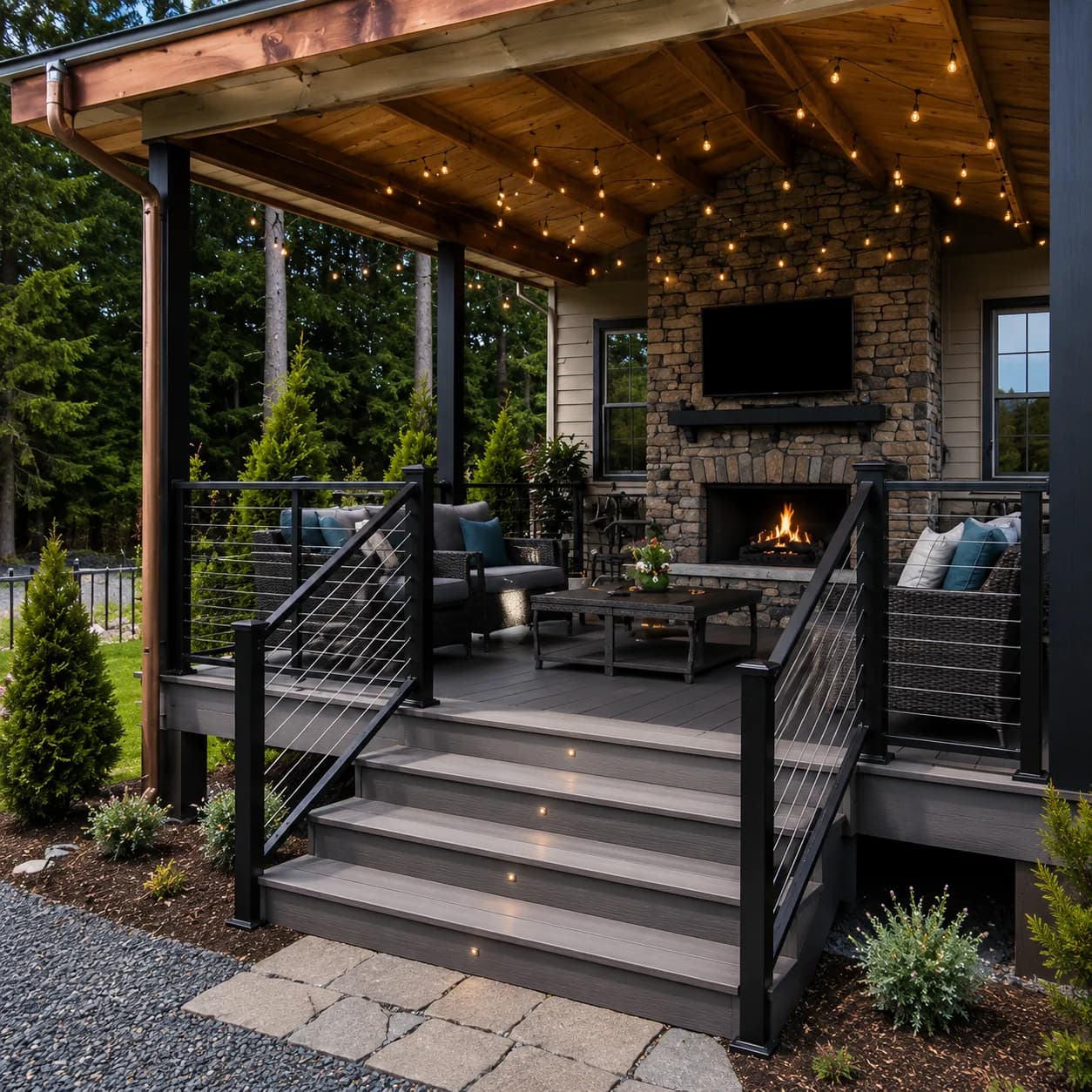
The single highest-impact upgrade is cover. A roof over even a portion of your deck means a passing shower no longer ends the evening, and your furniture and grill stay dry year-round. A solid pavilion roof gives full shelter; an adjustable louvered roof lets you open to the sun and close against the rain.
For most homeowners, a covered section gets used far more than the open area around it. We go deep on the options in covered deck ideas for Seattle weather — it's the natural companion to this article.
Move 2: Add heat
Cover keeps the rain off; heat keeps you out there. The two together are what turn a summer-only deck into a three-season room:
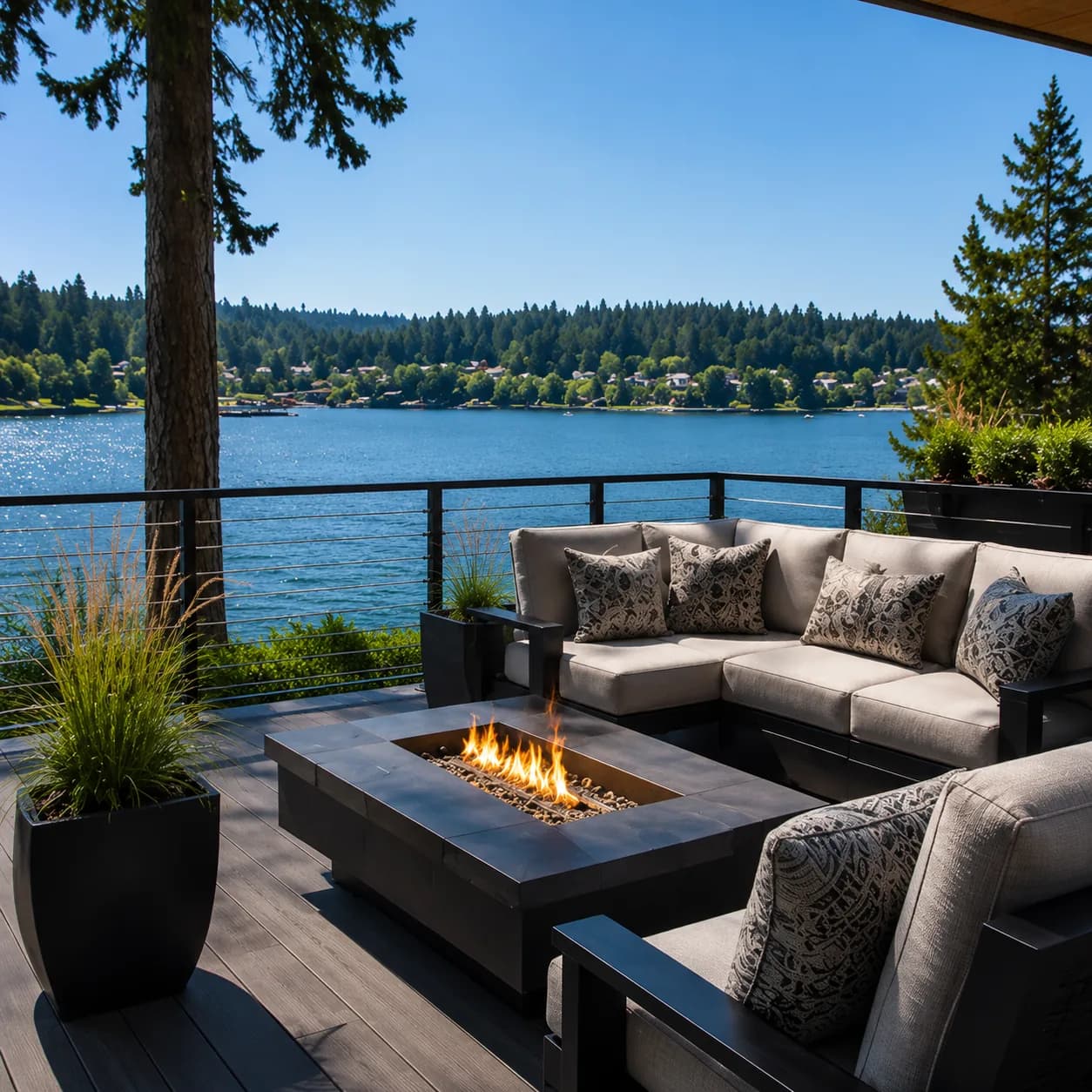
- Fire tables and outdoor fireplaces give you warmth plus a gathering point — the spot everyone naturally drifts toward when the air turns cool. They double as the centerpiece of the whole space.
- Overhead radiant heaters, mounted under a solid roof, warm a covered area efficiently without taking up any floor space.
Combine a fire feature to gather around with overhead heat to take the chill off, and a 50-degree evening becomes perfectly comfortable.
Move 3: Light it well
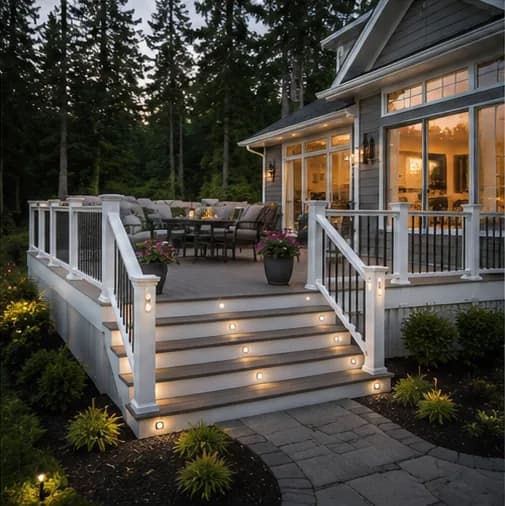
For roughly half the PNW year, the evening is the deck — it's dark by the time you're done with dinner. Lighting is what makes the space usable and inviting after sunset:
- Low-voltage stair and rail lighting for safe, sure footing
- Warm overhead or string lighting for atmosphere
- Accent lighting to highlight the structure and the landscaping beyond
It's one of the best returns per dollar on a deck, and it makes the space feel finished. Built into quality railings, it's also clean and durable — see best railing systems for modern PNW decks.
Move 4: Choose materials that don't quit in the wet
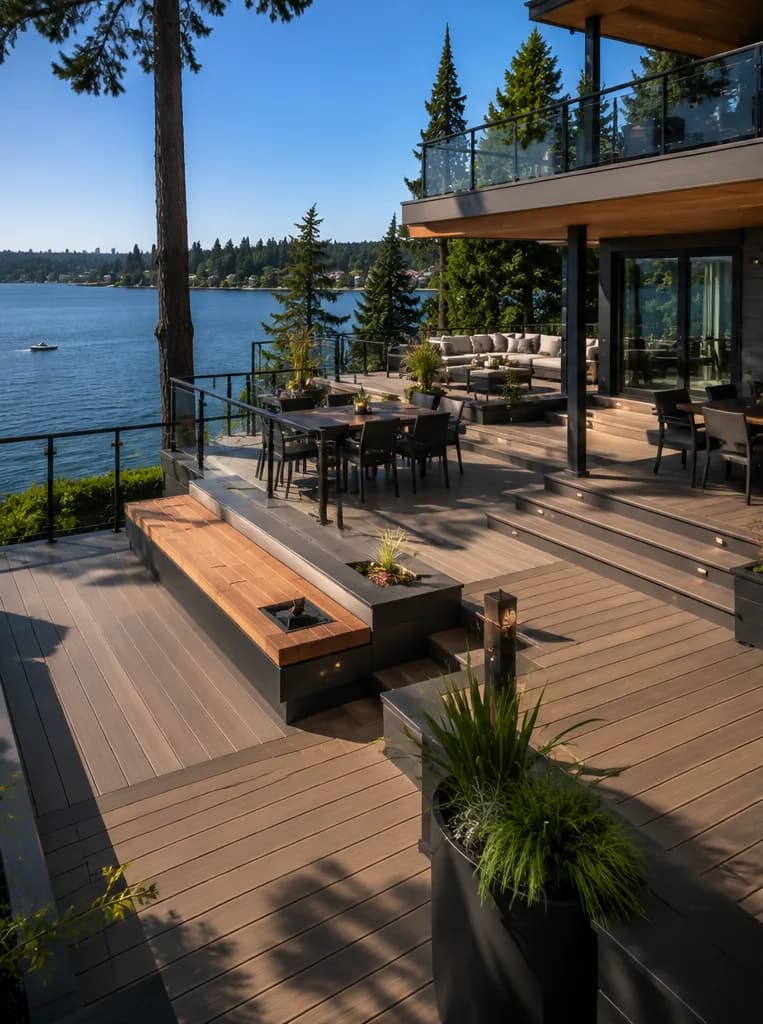
Stretching the season only works if the deck itself can take the moisture you're inviting it to face. This is another argument for low-maintenance composite or PVC over wood: you can use the deck in the rain without worrying about the surface, and you're not losing spring weekends to sealing instead of sitting. If you're still choosing, our PVC vs. composite vs. wood comparison lays it out.
Move 5: Furnish for comfort, not just summer
Small touches extend the season too: weather-resistant furniture you don't have to haul in and out, outdoor rugs and throws, a covered spot for cushions, and maybe a wind-blocking glass railing on an exposed lakefront so the breeze off the water doesn't chase you inside. The more comfortable and ready the space is, the lower the bar to step outside on a marginal day.
Move 6: Plan for it from the start
Here's the catch with most of these upgrades: a roof, heaters, and an outdoor kitchen add weight and load to a deck. Adding them to a structure that wasn't designed to carry them is a much bigger project than building the capacity in from day one. If a three-season deck is the goal, the structure should be engineered for it up front — properly sized framing and footings, Simpson Strong-Tie hardware at the connections, and the wiring and gas runs roughed in early.
This is the kind of thing a real builder plans for and a cheap bid ignores, and it's part of what actually drives deck cost — and value.
Make the most of where you live
The Pacific Northwest isn't a bad place for outdoor living. It's a great one, with a longer season than most people give it credit for — once the deck is built to meet the weather instead of waiting on it. Cover, heat, light, durable materials, and a structure designed for all of it: that's the recipe.
Ready to build a deck you'll actually use in October? Request a free estimate and let's design an outdoor space built dam good for every season we get.
Common Questions