Covered Deck Ideas for Year-Round Living in Seattle Weather
Here's the secret most people miss about getting more out of a deck in our climate: the answer isn't a bigger deck. It's a roof over part of the one you have. A covered section is what turns a fair-weather platform into a space you'll actually use in October, February and April — the months that make up most of the Pacific Northwest year. These are the covered-deck ideas we build most.
Why cover beats square footage here
A wide-open deck is only usable when the weather cooperates, which in Seattle is a frustratingly small slice of the calendar. Put a true roof over even part of it and the math changes completely: suddenly you can sit outside in a drizzle, host through a shower, and keep your furniture and grill dry year-round. For most homeowners, a covered 200-square-foot section gets used more than an open 400-square-foot one.
If you want to stretch the season without a full roof, pair these ideas with the strategies in getting the most out of deck season in the PNW.
Solid roof vs. louvered roof
The first decision is what kind of cover.
Solid roof / pavilion
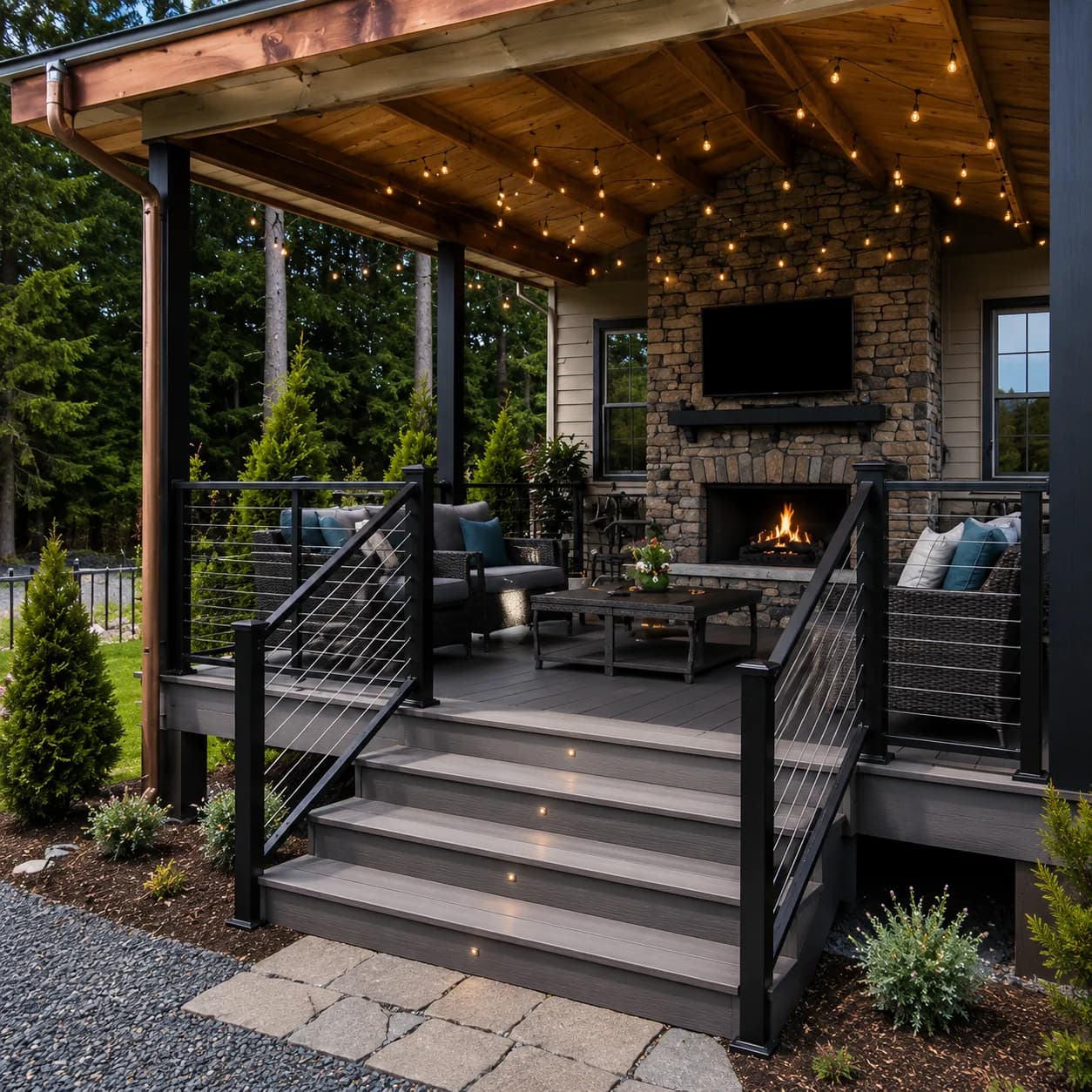
A permanent, waterproof roof — often matched to your home's roofline — gives full, reliable shelter. It's the most weatherproof option and the right call if you want a true outdoor room that shrugs off rain without a second thought. It also lets you mount overhead heaters, fans and lighting cleanly.
Louvered (adjustable) roof
An aluminum louvered roof has pivoting slats you can open for sun on a rare clear day and close tight when the rain returns. It's the best of both worlds for our changeable weather — open to the sky in July, sealed against the drizzle in November. Many close completely enough to keep the space dry in a downpour.
Dry-below systems: a second room for free
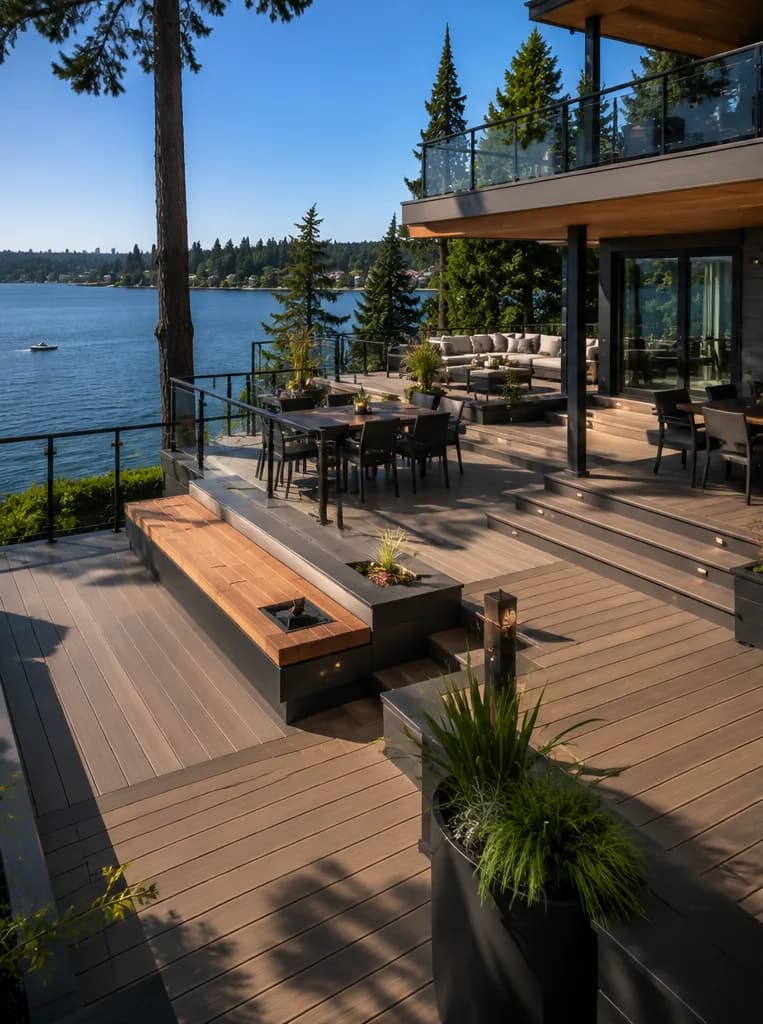
If your deck is elevated — common on our hillside and lakefront lots — a dry-below (under-deck) drainage system is one of the smartest moves available. It installs beneath the deck boards and channels water away, creating a dry, usable space underneath the deck.
That means a sheltered patio, a covered lounge, or protected storage on the lower level, all from a deck you were building anyway. On a sloped Eastside lot, it effectively gives you two outdoor spaces stacked on one footprint. It's a favorite of ours precisely because it turns our terrain into an advantage.
Heat makes a covered deck a three-season room
Cover keeps the rain off; heat keeps you out there. The two together are what make a PNW deck genuinely year-round:
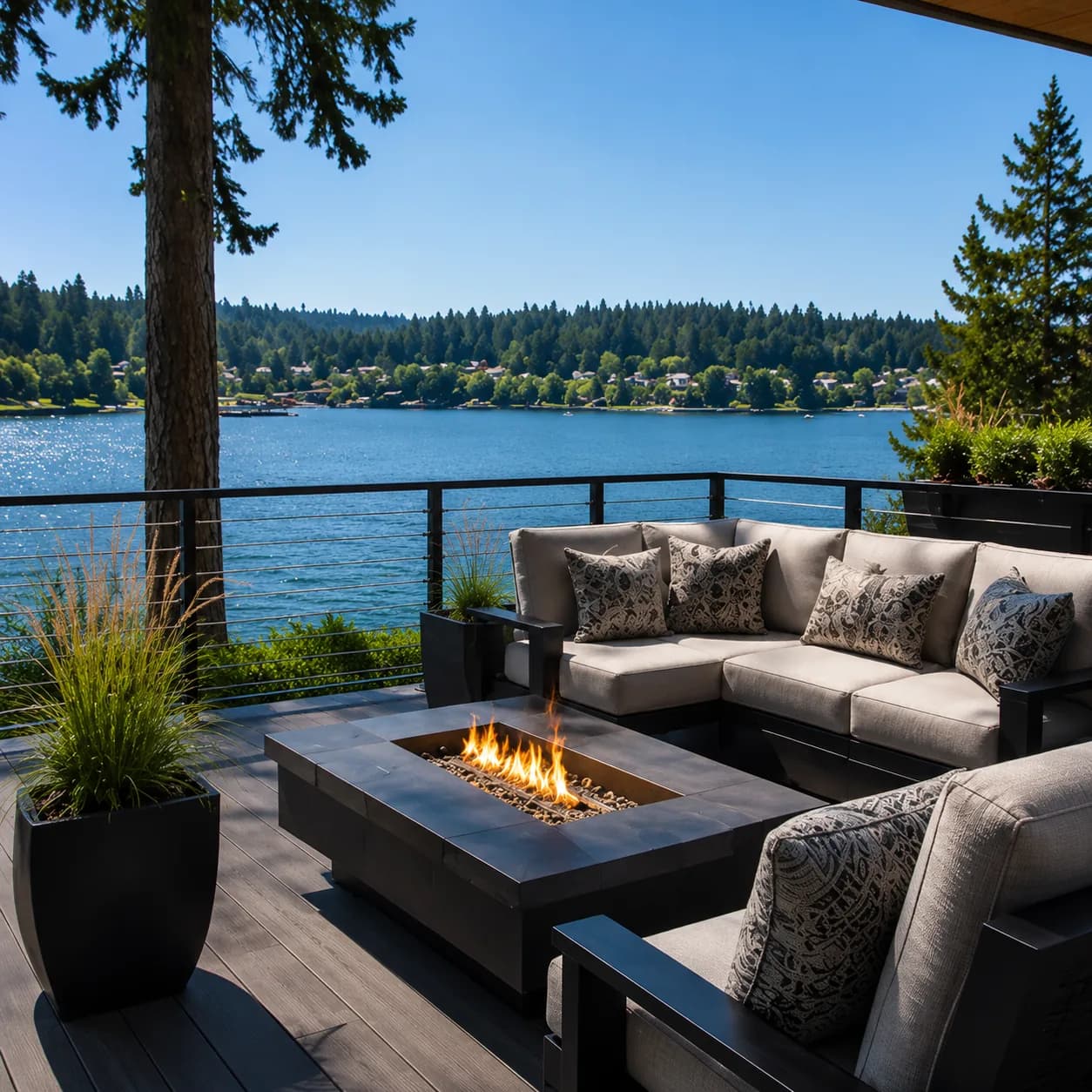
- Fire tables and outdoor fireplaces create a gathering spot and real ambiance — the centerpiece everyone drifts toward on a cool evening.
- Overhead radiant heaters, mounted to a solid roof, warm a covered area efficiently without eating floor space.
Most of our outdoor-living builds combine both: a fire feature to gather around and overhead heat to take the chill off the whole space.
Lighting for the long dark evenings
For roughly half the PNW year, the evening is the deck. Good lighting is what makes a covered deck usable after dark:
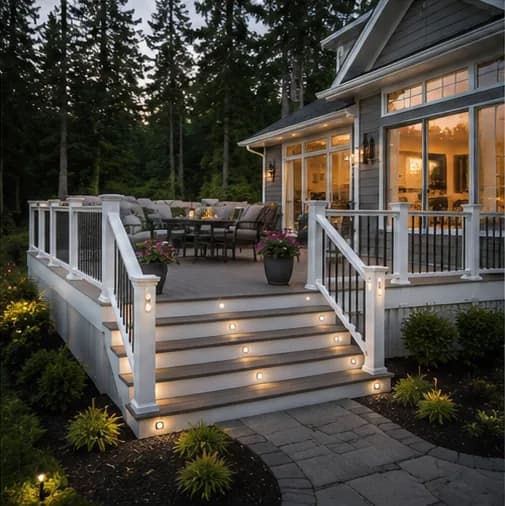
- Low-voltage stair and rail lighting for safe footing
- Warm overhead or string lighting under the roof for atmosphere
- Accent lighting to highlight the structure and landscaping beyond
It's one of the highest-impact upgrades per dollar, and on a covered deck the fixtures stay dry and last longer.
Outdoor kitchens that survive the weather
A covered deck is the right home for an outdoor kitchen in our climate. Under a solid roof, a grill, counter, sink and storage stay protected from the constant moisture that would otherwise shorten their life. It's the difference between an outdoor kitchen you cover with a tarp half the year and one you actually use on a Tuesday in March.
Build the structure for the cover from day one
A roof, heaters and an outdoor kitchen all add weight and load to a deck. That's not a problem — if the structure is engineered for it from the start. Trying to add a solid roof to a deck that wasn't designed to carry one is a much bigger job than building it in from the beginning.
This is why we plan covered features into the structural design up front, with properly sized framing and footings and Simpson Strong-Tie hardware at the connections. It's also why the build underneath matters even more on a covered deck than an open one — a theme we return to in how long composite decks last in Washington. Adding cover later also affects budget and permitting, so it's worth deciding early; see our 2026 cost breakdown.
Live outside all year
A covered deck is how Pacific Northwesterners beat the weather instead of waiting on it. Done right — with the structure, cover, heat and light all planned together — it's the most-used room in the house for months when the open deck sits empty.
Dreaming about a deck you can use in the rain? Request a free estimate and let's design a covered outdoor space built dam good for our weather.
Common Questions